What to Feed Birds in Winter: A Simple Backyard Guide
This post contains affiliate links. If you buy through them, Birdstyl may earn a small commission at no extra cost to you. Read our Affiliate Disclosure.
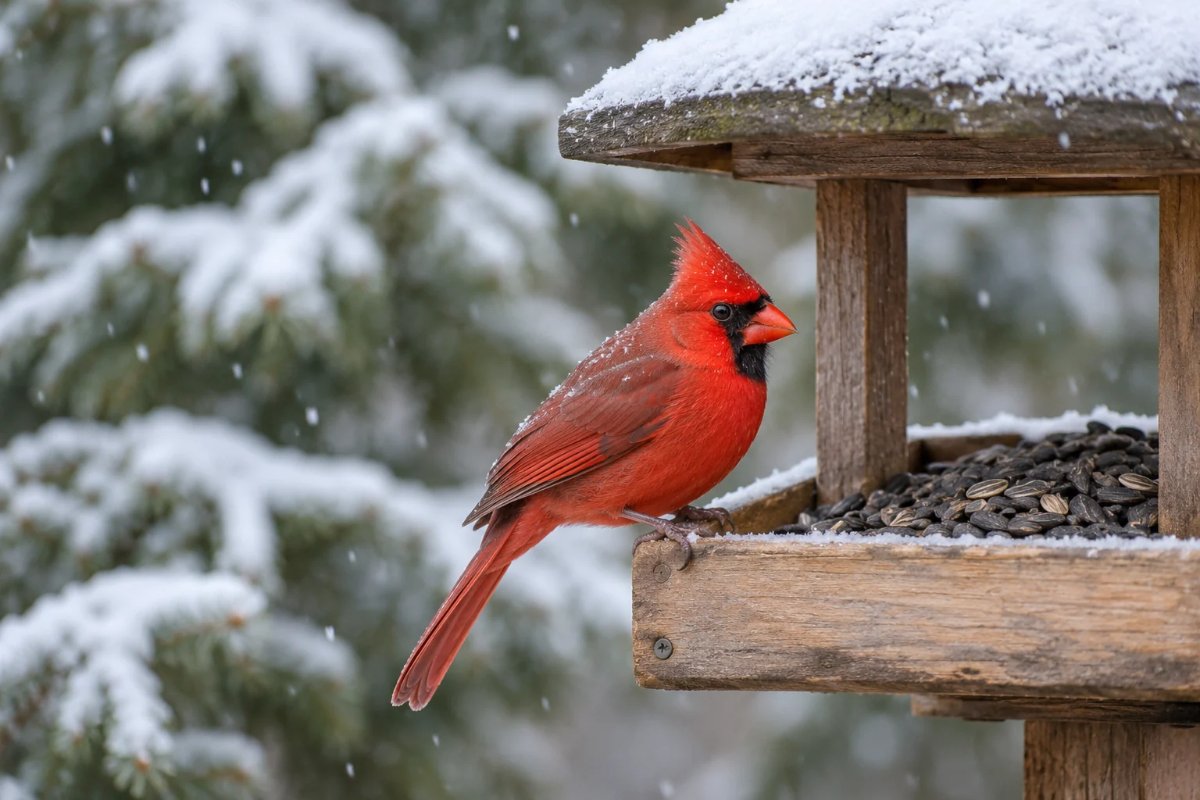
Winter is the season when a backyard feeder makes the biggest difference. Days are short, nights are cold, and many of the seeds and insects birds rely on are buried under snow or gone. The good news is that a few well chosen foods can turn your yard into a busy, colorful winter stop for cardinals, chickadees, juncos, woodpeckers, and more.
This guide explains what to feed birds in winter, which birds each food attracts, what to avoid, and how to keep your feeders safe and clean. Everything here is based on guidance from the Cornell Lab of Ornithology and its Project FeederWatch program, with the full list of sources at the end of the article.
Why Feeding Birds in Winter Matters
Small birds burn a lot of energy just to stay warm through a long winter night. During the warmer months, many backyard birds eat insects, berries, and fresh seeds. In winter, much of that natural food becomes hard to find. A feeder stocked with high energy food gives them an easy and reliable meal close to shelter.
Winter is also the best time to watch birds at home. With leaves off the trees, birds are easier to see, and mixed flocks of chickadees, titmice, nuthatches, and woodpeckers often move through yards together. If you have been thinking about starting a feeder, winter is a great season to begin.
The Best Winter Food for Most Birds: Black Oil Sunflower Seed
If you only buy one food, make it black oil sunflower seed. According to Project FeederWatch, it is the most common seed offered at feeders in North America. The seed is small, high in energy, and has a thin shell that is easy for small beaks to crack, which makes it a favorite of a wide variety of birds.
Birds that readily eat black oil sunflower seed include Northern Cardinals, chickadees, titmice, nuthatches, finches, and sparrows. Woodpeckers will take it too. Cornell notes that Northern Cardinals eat many kinds of birdseed, particularly black oil sunflower seed, and that Tufted Titmice prefer sunflower seeds over other foods.
You can also buy hulled sunflower seed, sometimes called sunflower hearts or chips. Birds can eat it without opening a shell, and it leaves almost no mess under the feeder. The downside is that it spoils faster than seed in the shell, so keep it dry and buy smaller bags you will use quickly.
Suet: High Energy Fat for Cold Days
Suet is beef fat, often sold in blocks or cakes that may include seeds, nuts, or dried fruit. It is one of the most useful winter foods because it gives insect eating birds the fat and calories they need when insects are scarce.
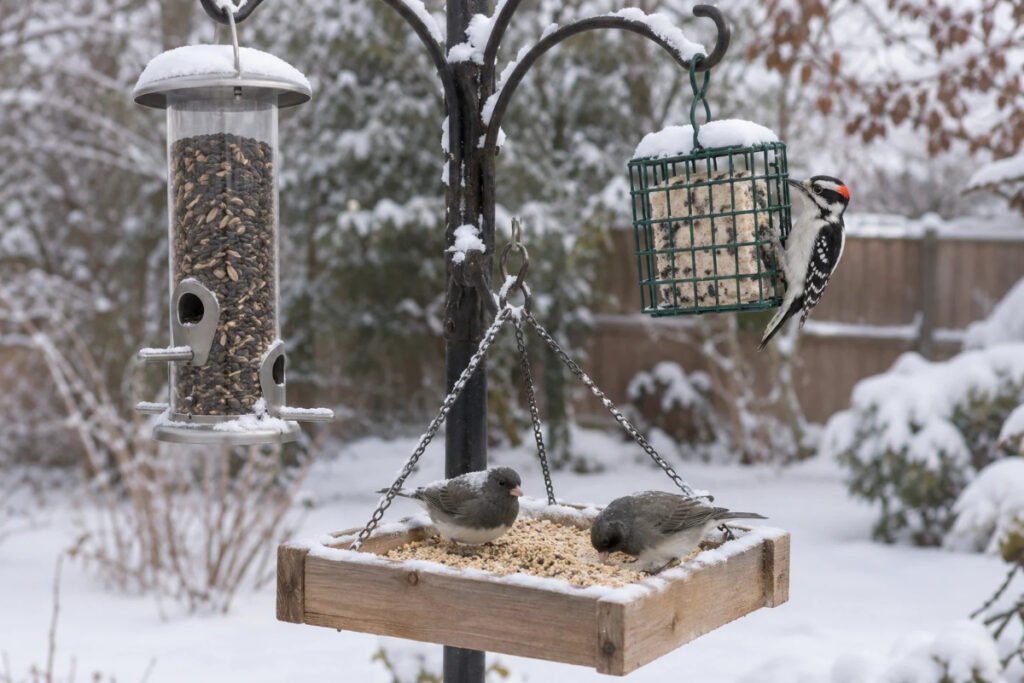
Woodpeckers are the classic suet visitors. Cornell lists suet and black oil sunflower seed as the main feeder foods of the Downy Woodpecker, and the Hairy Woodpecker eats suet and sunflower seeds as well. Chickadees, nuthatches, titmice, and Carolina Wrens also visit suet feeders, and in some areas Yellow-rumped Warblers come to suet in winter.
Plain suet can turn rancid in warm weather, which is one more reason winter is the ideal season to offer it. Hang suet in a simple wire cage feeder near a tree trunk, where woodpeckers feel at home.
Nyjer Seed for Goldfinches and Other Small Finches
Nyjer is a tiny black seed, sometimes sold as thistle. FeederWatch lists it as a favorite of American Goldfinches, Pine Siskins, and Common Redpolls. Because the seed is so small, it needs a special feeder with very small openings, or a soft mesh sock that finches can cling to.
Offering nyjer on its own, in its own feeder, reduces waste and keeps the small finches coming back.
Millet and Cracked Corn for Ground Feeding Birds
Not every bird likes to eat from a hanging feeder. Dark-eyed Juncos, many sparrows, and Mourning Doves prefer to feed on the ground or on a low tray. For these birds, white proso millet and cracked corn are good choices.
Cornell notes that juncos at feeders seem to prefer millet over sunflower seeds, and that American Tree Sparrows happily eat millet scattered on the ground. FeederWatch suggests offering cracked corn mixed with millet on the ground or on a platform feeder, which attracts doves, quail, and sparrows. Keep in mind that corn on the ground can also draw squirrels and other animals, so offer small amounts at a time.
Peanuts, Safflower, Fruit, and Mealworms
Once you have the basics in place, a few extra foods can bring in more species.
- Peanuts: Blue Jays love them and often carry them away to hide for later. Chickadees, nuthatches, and titmice eat shelled peanuts. Always choose raw or plain roasted peanuts, never salted or flavored ones.
- Safflower: a white seed that cardinals enjoy. Most birds prefer sunflower, but safflower is less popular with starlings, House Sparrows, and squirrels, so some people use it to keep those visitors away.
- Fruit: American Robins, bluebirds, mockingbirds, and waxwings eat fruit. Offer fruit on a tray, use grapes and raisins without preservatives, and remove moldy fruit right away because some molds produce toxins harmful to birds.
- Mealworms: live or dried mealworms are a favorite of Eastern Bluebirds, and chickadees, titmice, wrens, and nuthatches eat them too. Offer them in a shallow dish or on a flat tray.
What Not to Feed Birds in Winter
Some foods do more harm than good, or simply go to waste. Avoid salted or flavored peanuts and snacks. Skip cheap seed mixes that are full of red milo and other fillers. FeederWatch explains that milo is generally unpopular with birds in the eastern United States and often ends up wasted on the ground, although western birds eat more of it.
Never offer moldy seed, moldy nuts, or spoiled fruit. Wet seed can grow mold quickly, especially in feeders without a roof. If seed in your feeder looks clumped, smells bad, or shows fuzzy spots, throw it away and clean the feeder before refilling.
Choosing the Right Feeder for Each Food
The type of feeder you use decides which birds can reach the food. The Cornell Lab’s winter bird feeding guide describes three main styles that cover most backyards.
- Tray or platform feeders sit close to the ground and suit juncos, sparrows, and towhees. They also work on a deck railing, a stump, or a post.
- Hopper feeders look like a small house, hang from a tree or pole, and suit larger birds such as cardinals, jays, and grosbeaks.
- Tube feeders hang from a branch or pole and are good for finches, titmice, and chickadees.
A simple winter setup could be one hopper or tube feeder with black oil sunflower seed, one suet cage, and a small tray with millet near the ground. That combination already covers most of the common winter visitors in North America.
If you would like to see exactly who visits while you are at work or asleep, a hopper feeder with a built-in camera can record each bird and send the clips to your phone. You can browse smart bird feeders with cameras from Birdfy to see how they work.
Where to Place Your Feeders
Placement matters for safety. Windows are a real danger for birds, and the Cornell Lab recommends placing feeders within 3 feet of a window, or attaching them directly to the glass, so birds cannot build up speed and hit the window hard.
Birds also need a quick place to hide from hawks and cats. Cornell suggests putting feeders about 10 feet from trees or shrubs, ideally evergreens, so birds have shelter nearby without giving predators a hiding spot right next to the feeder. A loose brush pile in a corner of the yard gives ground feeding birds like sparrows and juncos extra cover in cold weather.
Keep Water Available All Winter
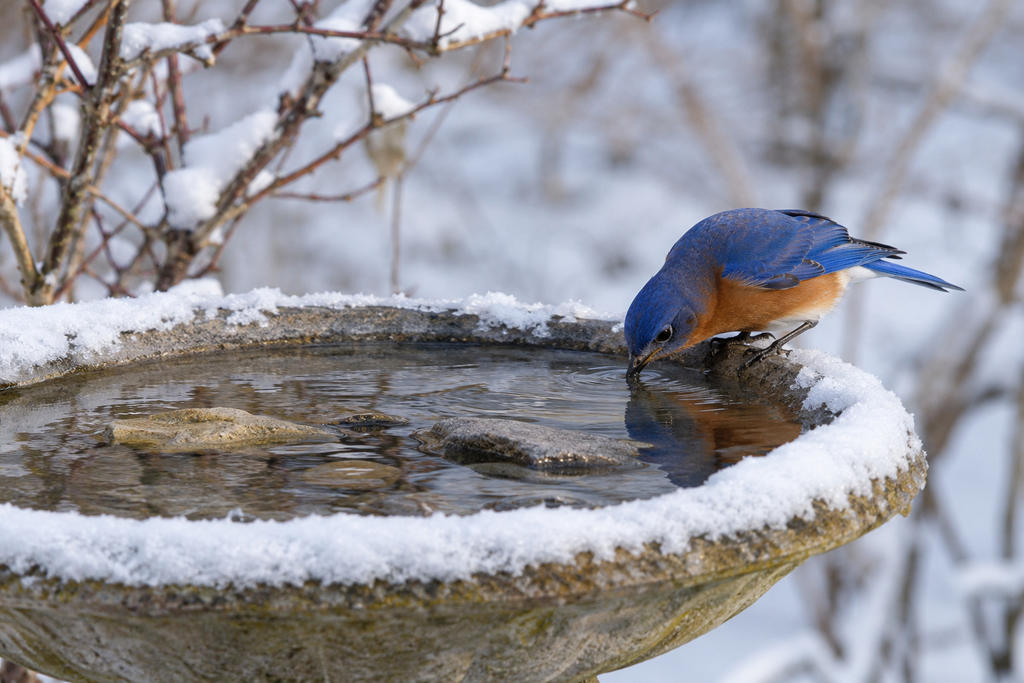
Food is only half of the winter picture. Birds still need water for drinking and for keeping their feathers clean, and natural water often freezes. A shallow birdbath with fresh water can attract birds that never visit a seed feeder.
FeederWatch recommends changing the water daily. In freezing climates, a birdbath heater keeps the water open. Adding a few stones or branches gives birds a safe place to stand. Never add antifreeze or any chemical to bird water, because it is poisonous.
Keep Feeders Clean and Seed Fresh
Busy winter feeders can spread disease when many birds crowd together. Cornell notes that dense flocks of Pine Siskins seem particularly vulnerable to salmonella outbreaks transmitted at feeders. Regular cleaning is the simplest way to protect your visitors.
The Cornell Lab suggests cleaning feeders about every two weeks, and more often during warm spells or when many birds are visiting. Rake up the empty shells and old seed under your feeders so they do not mold. Store your seed in sealed, waterproof metal containers to keep it dry and keep out mice.
A Simple Winter Feeding Plan to Start Today
You do not need a large budget to help birds this winter. Start small and add more as you learn which birds visit your yard.
- Fill one hopper or tube feeder with black oil sunflower seed.
- Hang one suet cake in a wire cage near a tree trunk.
- Scatter a small amount of white proso millet on a low tray for juncos and sparrows.
- Add a shallow birdbath with fresh water, heated if you live where water freezes.
- Clean your feeders every two weeks and keep your seed dry.
If nothing shows up at first, Cornell suggests scattering a little seed on the ground near the feeder to help birds notice it. Be patient, keep the food fresh, and enjoy the show, from your window or through a camera bird feeder if you want to watch from anywhere. Winter at the feeder can be one of the most rewarding parts of the year for anyone who loves backyard birds.
Sources
- Project FeederWatch: Food Types (feederwatch.org)
- Cornell Lab of Ornithology: Winter Bird Feeding, PDF guide (allaboutbirds.org)
- All About Birds: Northern Cardinal Life History (allaboutbirds.org)
- All About Birds: Dark-eyed Junco Life History (allaboutbirds.org)
- All About Birds: Downy Woodpecker Life History (allaboutbirds.org)
- All About Birds: Pine Siskin Life History (allaboutbirds.org)