
How to Attract Cardinals to Your Backyard (Food, Feeders and Plants)
This post contains affiliate links. If you buy through them, Birdstyl may earn a small commission at no extra cost to you. Read our Affiliate Disclosure.
Few backyard sights beat a bright red Northern Cardinal on a snowy branch. Cardinals stay in the same area all year, so once a pair decides your yard is a good place to live, you can enjoy them in every season. The good news is that cardinals are not hard to please. They need the right seed, a safe way to reach it, thick cover nearby, and fresh water.
This guide walks you through how to attract cardinals to your backyard, step by step. It covers the foods they prefer, the feeders that suit their size, the plants that give them shelter and nest sites, and the simple safety habits that keep them coming back. Every tip is based on information from the Cornell Lab of Ornithology, Project FeederWatch, and the National Audubon Society, with the full list of sources at the end of the article.
Get to Know the Northern Cardinal
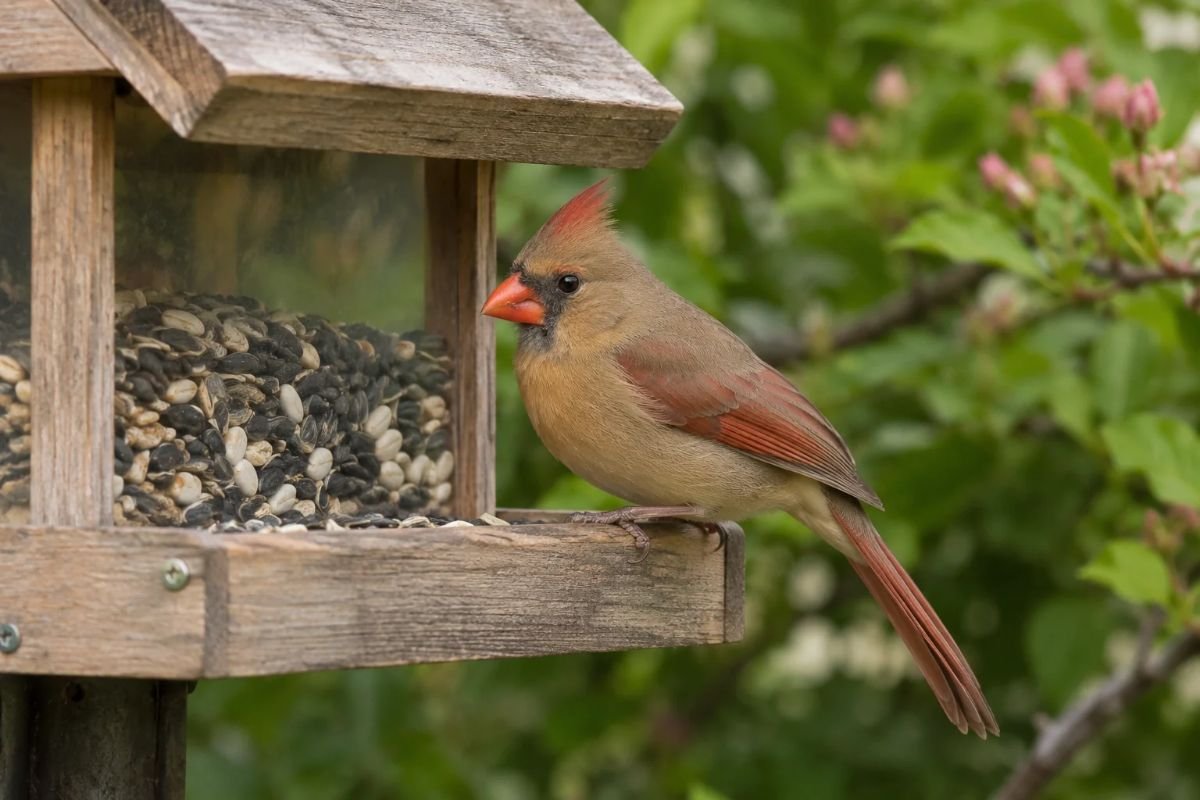
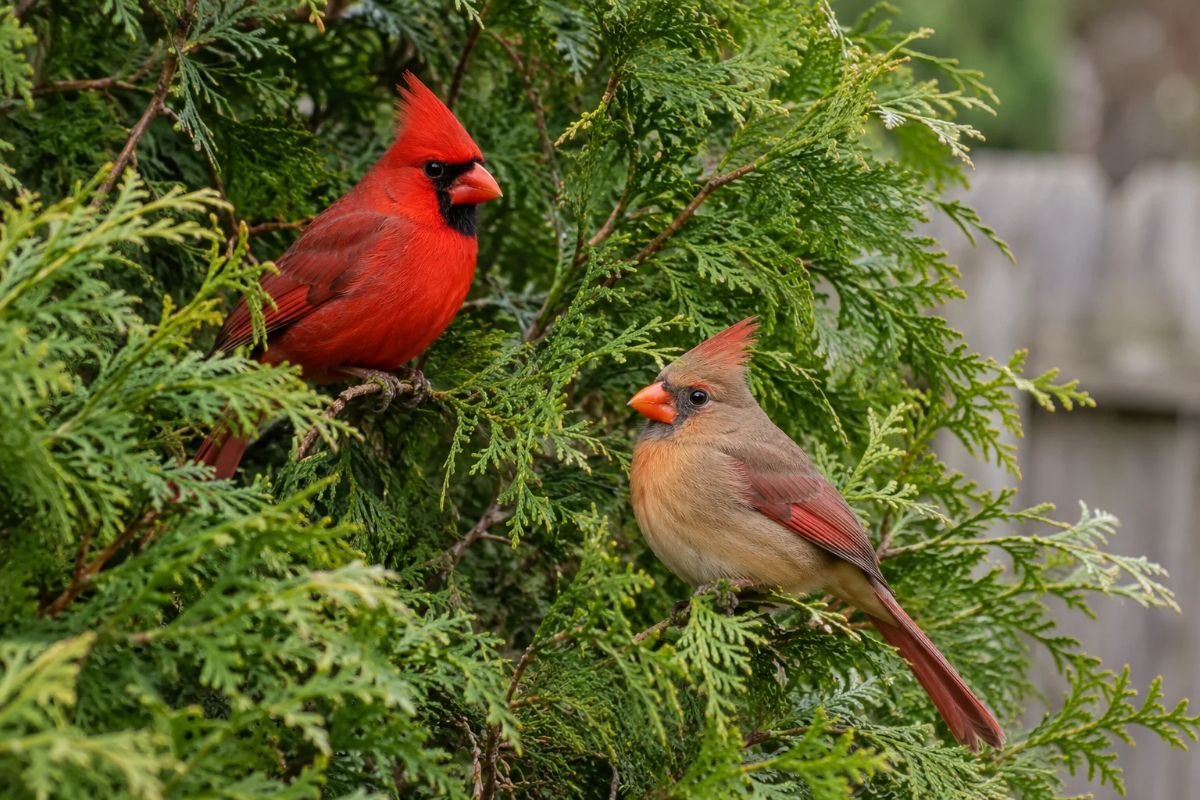
The male cardinal is the famous one: bright red from head to tail, with a pointed crest and a black face around a thick orange bill. The female is a warm tan color with red tones on her wings, tail, and crest, and she has the same strong orange bill. That heavy bill is built for cracking seeds, which tells you a lot about what cardinals like to eat.
According to the Cornell Lab’s All About Birds guide, cardinals live in dense, shrubby places such as forest edges, hedgerows, overgrown fields, and backyards with ornamental plantings. Cornell also notes that towns and suburbs have helped the species spread north across eastern North America. If you are not sure cardinals live near you, the range map on All About Birds is a quick way to check.
A few habits are worth knowing before you start. Cardinals usually feed on or near the ground and hop through low branches. They fly short distances between thickets on rounded wings, so they like food that sits close to cover. In fall and winter they often gather in loose flocks, and Cornell reports these groups can range from about a dozen birds to several dozen. That is why a well stocked winter feeder can bring in more than one pair.
Offer the Seeds Cardinals Love Most
If you want cardinals, start with black oil sunflower seed. Cornell lists it as the birdseed cardinals take most often at feeders, and the National Audubon Society calls it the best choice for them. Audubon also points out that the same seed brings in chickadees, titmice, nuthatches, and House Finches, so one food gives you a lively feeder.
Audubon mentions a study that ranked cardinal preferences: black oil sunflower seed came first, then striped sunflower seed, then sunflower chips. Hulled sunflower, sold as hearts or chips, is a good option if you want less mess under the feeder. Project FeederWatch notes that hulled seed does reduce the shells on the ground but spoils faster than seed in the shell, so buy smaller amounts and keep it dry.
Safflower seed is the other cardinal favorite. Project FeederWatch says safflower looks like a white sunflower seed and attracts cardinals and other big-billed birds, although most birds still prefer sunflower. New Jersey Audubon adds that some people switch to safflower when grackles and starlings crowd the feeder, because those birds find the hard shell difficult to open. A mix of sunflower and safflower is a simple way to get the best of both.
Cardinals are flexible eaters. Audubon notes they will also take peanuts, cracked corn, and suet. If you want a full list of seeds for the cold months, our guide on what to feed birds in winter explains which foods each backyard bird prefers.
Pick a Feeder That Fits a Cardinal
Cardinals are medium-sized songbirds, and they are not acrobats like chickadees. They like a steady, roomy place to stand while they crack seeds. Small tube feeders with short perches are a poor match. Project FeederWatch explains that feeders with short perches suit small birds such as finches and keep larger birds away.
Two feeder styles work well for cardinals:
- Platform or tray feeders. A flat, raised tray with drainage holes. FeederWatch says trays attract most feeder species, and they match the way cardinals like to feed from a flat surface.
- Large hopper feeders. A tray with walls and a roof that keeps seed dry. FeederWatch notes that large hoppers attract most feeder birds and give bigger species room to feed.
Because cardinals often feed on the ground, a little seed scattered under the feeder can help them find it. Just scatter only what the birds will finish in a day, so leftover seed does not get moldy or draw unwanted visitors.
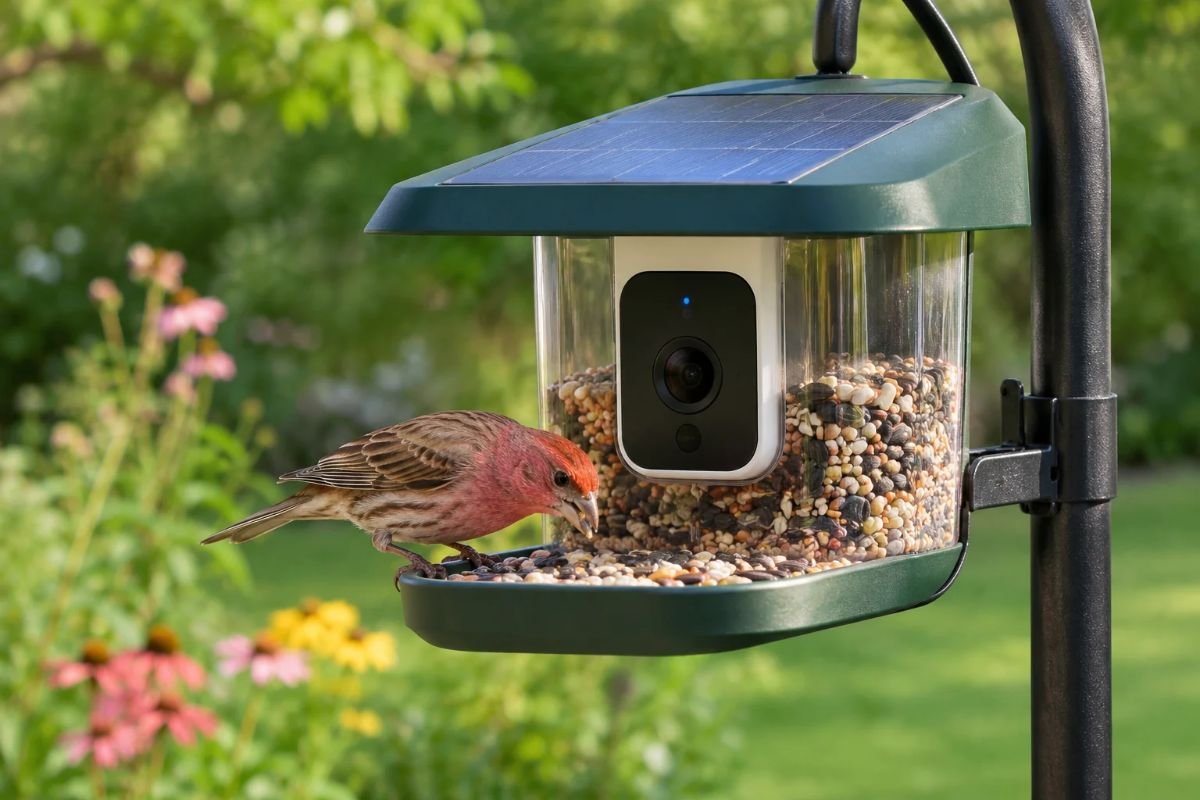
Some newer hopper-style feeders also come with a built-in camera, so you can see which birds visit and when, right from your phone. If you like that idea, you can browse the smart camera feeders from Birdfy, and our Smart Feeders section will cover this type of feeder in more detail.
Place Your Feeder Near Cover, Safely
Where you put the feeder matters as much as what you put in it. Cardinals move in short flights between thickets, so a feeder with shrubs or small trees within easy reach feels much safer to them than one standing alone in the middle of an open lawn. Cover gives them a place to wait their turn and a quick escape route if a hawk passes over.
Windows are the other thing to think about. Audubon chapters recommend the “rule of 3 or 30”: place feeders and birdbaths either within 3 feet of a window or more than 30 feet away. Audubon explains that a bird leaving a feeder that close to the glass cannot build up enough speed to hurt itself if it hits the window, while a feeder 30 feet away gives birds room to steer around the house.
Plant Dense Shrubs for Shelter and Nesting
Food brings cardinals in, but shelter is what makes them stay. Cornell describes their nest as a cup wedged into a fork of small branches in a sapling, shrub, or vine tangle, usually 1 to 15 feet off the ground and hidden in thick foliage. The female does most of the building, and pairs rarely reuse an old nest, so they need good nesting spots each season.
Cornell lists many plants cardinals use for nesting, including dogwood, hawthorn, grape, redcedar, spruce, pines, hemlock, rose, and blackberry. You do not need a large yard. A row of dense shrubs along a fence, a small evergreen in a corner, or a tangle of native vines can give a pair the privacy they look for. If you are adding new plants, ask a local nursery which of these grow best in your area.
Grow Natural Foods Cardinals Eat
Cardinals eat mostly seeds and fruit, with insects added to the menu. Cornell lists natural foods such as dogwood, wild grape, mulberry, hackberry, blackberry, sumac, grasses, and sedges. Several of these, like dogwood and grape, do double duty as nest sites, which makes them excellent choices for a cardinal friendly yard.
Insects matter more than many people realize. Cornell notes that cardinal nestlings are fed mostly insects, and it lists beetles, crickets, katydids, and spiders among the small creatures cardinals eat. A yard with a mix of plants supports more insects, and that helps cardinals raise their young. Audubon also suggests leaving the seed heads of coneflowers, goldenrods, and other perennials standing through winter, since they give birds natural food in the cold months.
Add Fresh Water All Year
Water is one of the easiest ways to make your yard more attractive to cardinals and every other bird. Audubon recommends a fountain or birdbath, and a heated birdbath if your winters regularly drop below freezing. A shallow basin with a rough surface gives birds safe footing for drinking and bathing.
Keep the water clean by rinsing and refilling the bath every few days, and scrub it whenever you see algae or droppings. Remember the same window rule applies here: place the birdbath either very close to the house or well away from it.
Leave a Little Mess in Your Yard
A perfectly tidy yard is not very useful to a cardinal. Audubon suggests building a brush pile from fallen limbs, pruned branches, or an old Christmas tree. It gives cardinals and sparrows a sheltered place to hide from wind, cold, and predators, especially in winter.
Audubon also recommends leaving dead leaves where they fall in garden beds. Leaf litter hides insects that birds can find, and it provides material for nest building. A corner of the yard kept a bit wild can make a real difference.
What to Do When a Cardinal Attacks Your Window
Once cardinals move in, you may hear one tapping or flying at a window again and again. This is normal territorial behavior. The Cornell Lab explains that during spring and early summer, birds defend their territory, and a bird that sees its reflection takes it for a rival. Northern Cardinals are among the species that do this most, and both males and females can be involved.
The fix is to remove the reflection from the outside of the glass. Cornell suggests covering the window with netting, fabric, or newspaper, or rubbing soap streaks on the glass, then taking the covering down once the bird stops. Cornell adds that the behavior usually ends within days or a few weeks, but the bird can tire or hurt itself in the meantime, so it is worth acting quickly.
Keep Feeders Clean and Be Patient
Audubon reminds bird lovers to clean feeders and birdbaths regularly. Dirty feeders and wet, moldy seed can spread disease between birds. Empty old seed, scrub the feeder, let it dry fully, and refill it with fresh food. Check trays after rain and remove any seed that has clumped together.
Patience is the last ingredient. Cardinals may take a few days or a few weeks to find a new feeder, especially if they already know other food sources nearby. Keep the seed fresh and the area safe, and check the feeder at different times of day so you do not miss their visits. A camera feeder can also record visitors for you while you are away.
Quick Checklist to Attract Cardinals
- Fill a platform or large hopper feeder with black oil sunflower seed.
- Add safflower seed or a sunflower and safflower mix.
- Place the feeder near shrubs, and within 3 feet or beyond 30 feet of windows.
- Plant or keep dense shrubs and small evergreens for shelter and nests.
- Grow plants with berries and seeds, such as dogwood, grape, or sumac.
- Offer fresh water in a birdbath, heated if your water freezes in winter.
- Build a brush pile and leave some leaves in garden beds.
- Clean feeders and birdbaths regularly.
Follow these steps and your yard will offer everything a cardinal pair needs: food, water, cover, and a safe place to raise a family. For more ideas on stocking your feeders through the cold season, read our simple backyard guide to winter bird food.
Sources
- All About Birds: Northern Cardinal Life History (allaboutbirds.org)
- National Audubon Society: How to Attract Northern Cardinals to Your Home (audubon.org)
- Project FeederWatch: Food Types (feederwatch.org)
- Project FeederWatch: Feeder Types (feederwatch.org)
- All About Birds: A Bird Keeps Flying Into My Window on Purpose (allaboutbirds.org)
- Audubon Upper Mississippi River: Feeder Placement (umr.audubon.org)
- New Jersey Audubon: Safflower Seed (njaudubon.org)