What to Feed Birds in Spring and Summer
This post contains affiliate links. If you buy through them, Birdstyl may earn a small commission at no extra cost to you. Read our Affiliate Disclosure.
Spring and summer are the most active months at the backyard feeder. Birds are raising young, insects are everywhere, and the birds themselves are burning more energy than at any other time of year. What you offer at this time of year can make a real difference to the birds nesting nearby and the ones passing through on migration. The good news is that spring and summer feeding is straightforward once you know what to focus on.
This guide covers what to feed birds in spring and summer, which foods to add for nesting birds and fledglings, which feeders work best in warm weather, and a few simple habits that keep your setup safe when temperatures rise. All information comes from the Cornell Lab of Ornithology, the National Audubon Society, and Project FeederWatch, with the full source list at the end.
Why Spring and Summer Feeding Is Different
Winter feeding is about helping birds survive cold and food scarcity. Spring and summer feeding is about something different: supporting birds that are nesting, raising chicks, and migrating. The Cornell Lab notes that birds switch to a higher-protein diet during the breeding season, with insects becoming the main food source for most songbirds and their nestlings.
That shift matters for what you offer at the feeder. Seeds are still useful, but high-protein foods like mealworms, suet, and peanuts become especially valuable in spring and summer. The National Audubon Society points out that providing protein-rich foods during nesting season can help parent birds spend less time foraging and more time at the nest, which can improve chick survival.
Migration also peaks in spring, particularly from late April through late May across most of the United States. Project FeederWatch notes that many birds that do not visit winter feeders will stop at spring feeders briefly during migration, including species you may never see at other times of year. Keeping feeders stocked and clean during this window gives you the best chance of seeing those visitors.
Black Oil Sunflower Seed Works Year Round
Black oil sunflower seed remains the most useful single food you can offer at any season. The Cornell Lab lists it as the seed taken most often at feeders, and Project FeederWatch confirms that it attracts the widest variety of backyard species. Cardinals, chickadees, nuthatches, finches, and titmice all take it readily in spring and summer just as they do in winter.
One change to consider in warmer months is switching to hulled sunflower, sold as sunflower hearts or chips. The National Audubon Society notes that hulled seed leaves no shells to pile up under the feeder, which matters more in spring and summer when wet shells can grow mold quickly. The tradeoff is that hulled seed spoils faster, so buy smaller amounts and check the feeder every few days to make sure the seed is still dry and fresh.
Mealworms Are the Top Spring and Summer Food
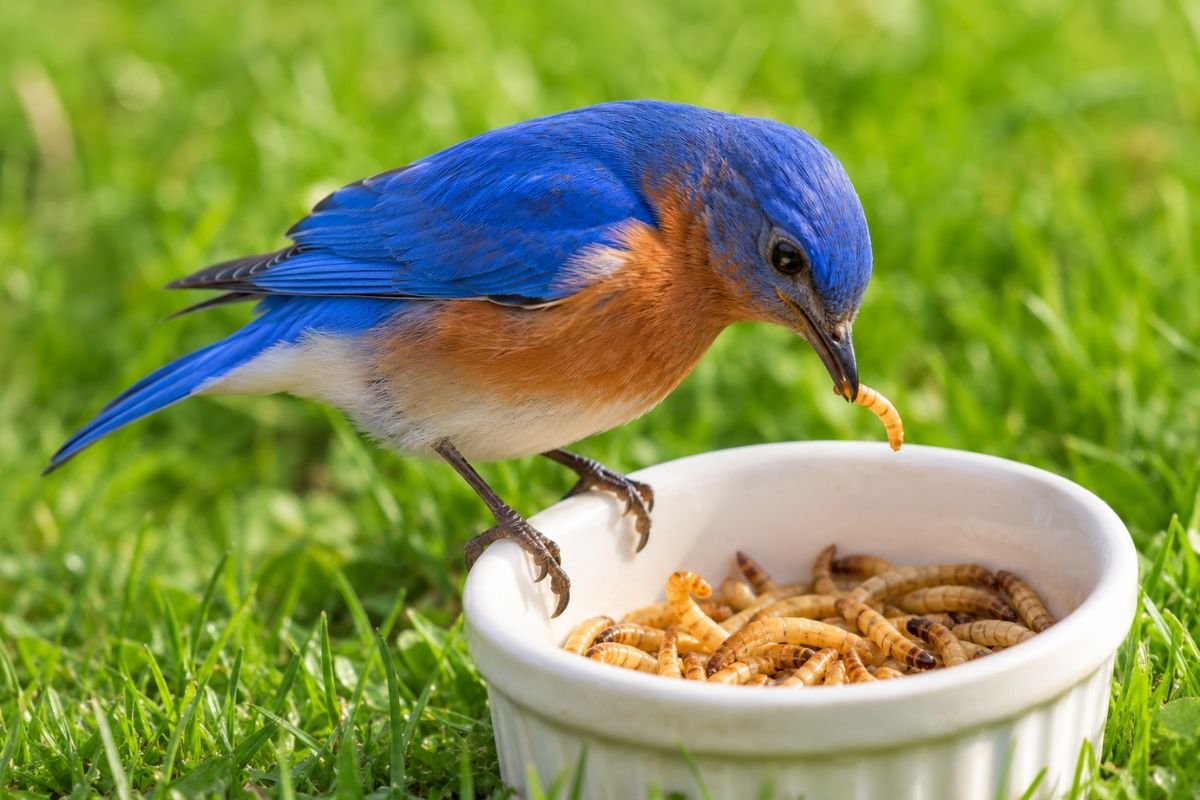
If you add just one new food for spring and summer, make it mealworms. The Cornell Lab describes mealworms as one of the best foods for attracting bluebirds, robins, and other thrushes to the feeder, species that rarely visit seed feeders at all. The Audubon Society notes that mealworms are also eagerly taken by wrens, warblers, and catbirds during migration and nesting season.
Live mealworms are the most effective because the movement attracts birds, but dried mealworms are more convenient and still draw visitors. Project FeederWatch suggests starting with a small shallow dish of live mealworms placed near a fence or low perch where bluebirds can spot them easily. Once a pair discovers the dish, they will return for them throughout the nesting season and bring their fledglings to learn where the food is.
Mealworms are especially valuable after the eggs hatch. Cornell notes that most songbird nestlings are fed almost entirely on insects in their first weeks of life, even if the adults eat mostly seeds the rest of the year. Offering mealworms near an active nest gives parent birds a reliable protein source close to home.
Suet in Spring and Summer: Use the Right Kind
Standard beef suet melts in temperatures above about 70 degrees Fahrenheit and can go rancid quickly in summer heat, which makes it a poor choice for warm months. The Cornell Lab recommends switching to no-melt or rendered suet cakes in spring and summer. These are made from processed fat that holds its shape at higher temperatures and does not spoil as quickly as raw fat.
Suet is taken by woodpeckers, nuthatches, chickadees, and Carolina Wrens throughout the year, and Project FeederWatch notes that parent woodpeckers will carry pieces of suet to their nest cavity to feed chicks during the breeding season. If you have a pair of Downy or Hairy Woodpeckers nesting nearby, a no-melt suet cake close to their territory gives them a reliable source of fat and protein when they need it most.
Nectar for Hummingbirds and Orioles
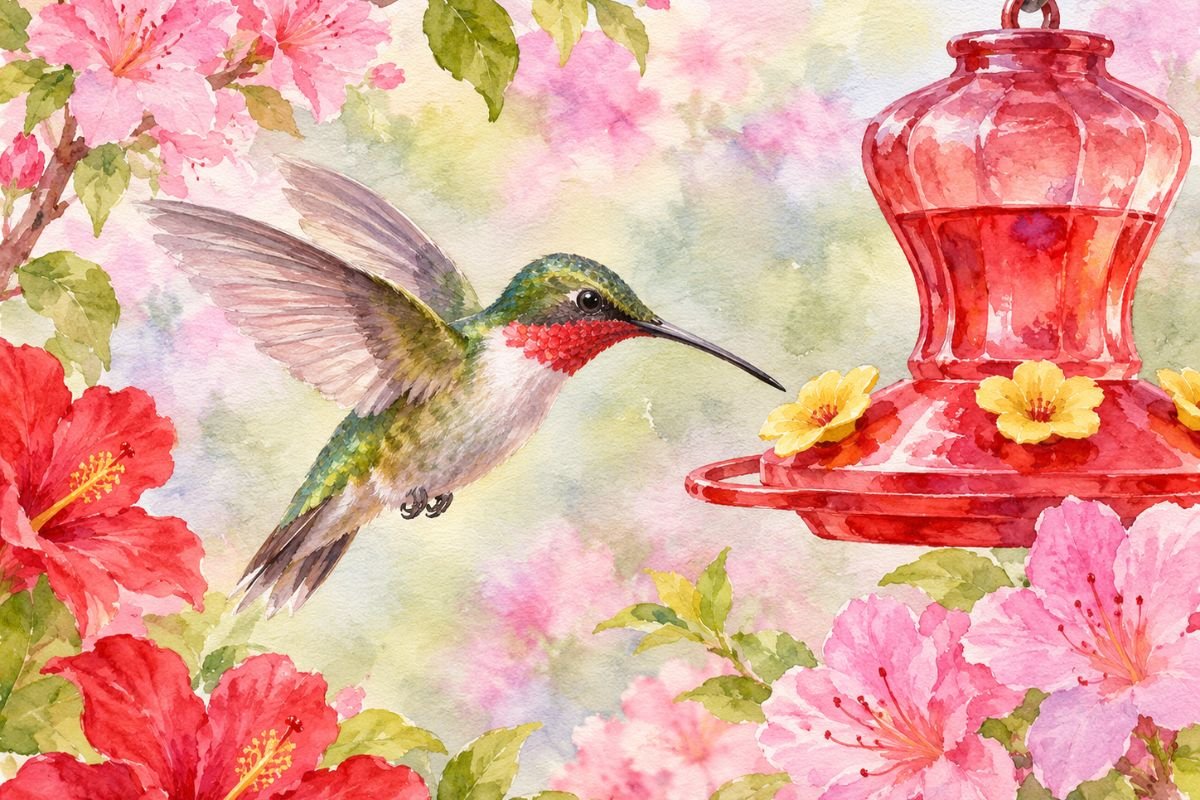
Spring is when hummingbirds return to backyards across most of the United States. The Cornell Lab says Ruby-throated Hummingbirds arrive in the Southeast as early as late February and reach the northern states by May. Setting up a hummingbird feeder a week or two before they are expected in your area gives early arrivals a food source right away.
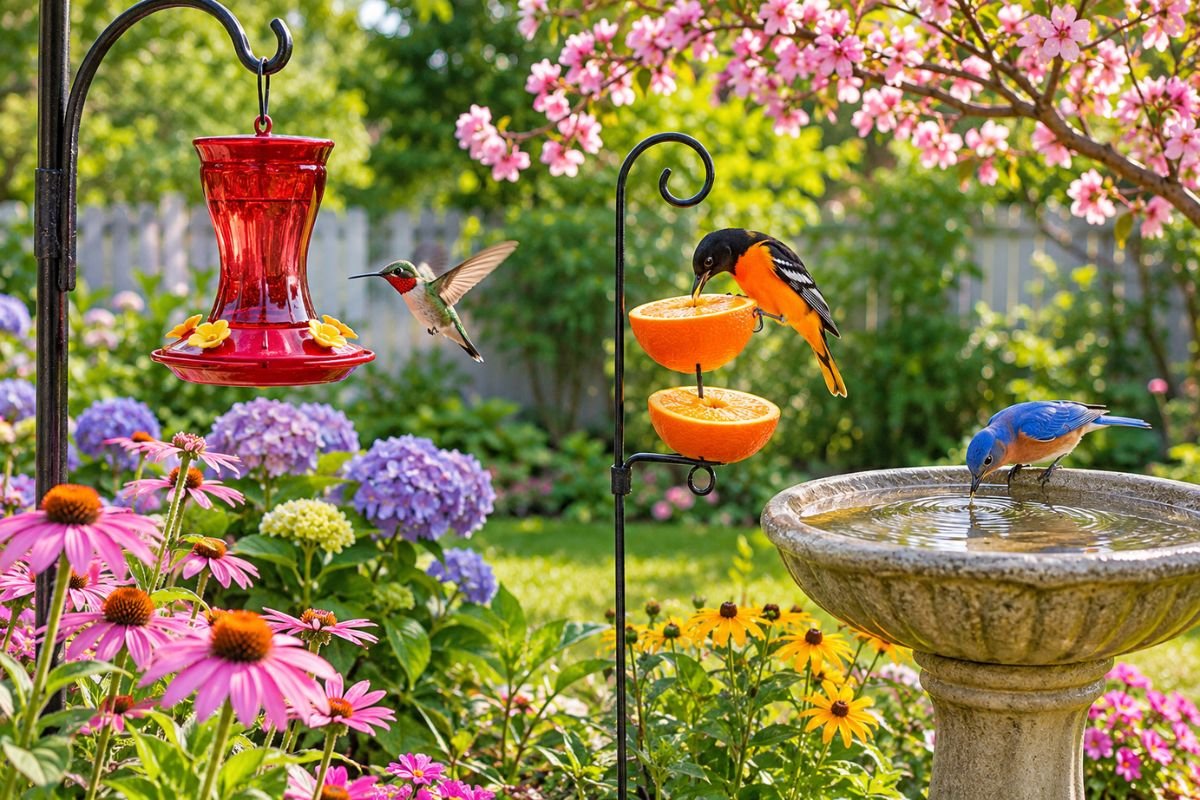
The National Audubon Society gives a simple recipe for hummingbird nectar: one part white granulated sugar dissolved in four parts boiling water, cooled before filling the feeder. Audubon advises against red dye, honey, or artificial sweeteners, all of which can harm hummingbirds. Clean the feeder every two to three days in warm weather, or more often if you see the nectar turning cloudy.
Baltimore Orioles also arrive in spring across much of the eastern US and are attracted to nectar feeders. Cornell notes that orioles prefer a slightly sweeter mixture than hummingbirds, with a ratio of one part sugar to six parts water, and that orange-colored feeders tend to attract them more reliably. Audubon adds that sliced oranges placed on a platform feeder or a spike next to the nectar feeder can bring in orioles even before they locate the nectar port.
Fresh Fruit for Summer Visitors
Several birds that rarely touch seed feeders will come readily for fresh or dried fruit in summer. The Cornell Lab lists fruit as a main food source for Gray Catbirds, Cedar Waxwings, American Robins, and orioles. The Audubon Society suggests offering halved oranges, apple slices, or grape jelly on a small platform or nail spike during migration and the breeding season.
Grape jelly deserves a mention on its own. Project FeederWatch notes that Baltimore Orioles and Gray Catbirds are particularly attracted to grape jelly, and that offering it in a small dish next to orange halves gives you the best chance of attracting both species. Use only pure grape jelly without artificial sweeteners, and replace it every couple of days so it does not ferment in the heat.
Nyjer Seed for Goldfinches in Summer
American Goldfinches are one of the latest-nesting birds in North America, with many pairs not starting their nests until late June or July, timed to when thistles go to seed. Project FeederWatch notes that Nyjer seed, also called thistle seed, is the most effective food for attracting goldfinches at any time of year, and that keeping a Nyjer feeder stocked through summer will bring in goldfinches even when most other birds have stopped visiting regularly.
Use a tube feeder with small ports designed for Nyjer seed. FeederWatch explains that the tiny ports keep the seed in the feeder rather than spilling on the ground, which is important because Nyjer seed is expensive and molds quickly when wet. Check the seed level often in summer, since goldfinches can empty a small feeder in a day when a flock moves through. If you want to watch them visit without stepping outside, the Birdfy smart camera feeder lets you catch every visit from your phone.
Keep Water Available and Fresh
Fresh water is more important in spring and summer than any feeder food. The Cornell Lab says that a clean birdbath can attract more species in summer than a well-stocked feeder, because every bird needs water but not every bird eats seeds. Species that never visit feeders, including warblers, thrushes, and swallows, will come to a birdbath regularly.
Change the water every one to two days to prevent mosquito larvae from hatching, and scrub the basin with a stiff brush at least once a week. The National Audubon Society recommends adding a dripper or small fountain to create the sound of moving water, which draws birds from farther away and reduces algae buildup. In hot weather, check the bath daily since it can evaporate quickly.
Feeder Hygiene Matters More in Warm Weather
Warm temperatures make spoiled seed and dirty feeders a bigger risk than in winter. The Cornell Lab warns that wet or old seed can grow mold and harmful bacteria that sicken birds, and that feeders that are not cleaned regularly can become a source of disease at a time when large numbers of birds are gathering to feed.
Clean seed feeders at least once every two weeks in spring and summer, and more often if you notice clumping or discoloration in the seed. Use a ten percent bleach solution, rinse thoroughly, and let the feeder dry completely before refilling it. Project FeederWatch recommends buying smaller quantities of seed in warmer months and storing it in a cool, dry place so it stays fresh longer.
A camera feeder from Birdfy can help you monitor seed levels and spot problems early without going outside to check every day. If the seed looks wet or the birds suddenly stop visiting, the camera feed often shows you why before you make the trip to the feeder.
Should You Feed Birds in Summer at All
Some people wonder whether feeders are still useful in summer when natural food is plentiful. The Cornell Lab addresses this directly and says that supplemental feeding in summer does not make birds dependent or cause them to stop foraging naturally. Cornell notes that studies show birds get a small portion of their diet from feeders even when they are visiting regularly, and that the main benefit is giving people a chance to observe birds up close.
The Audubon Society adds that summer feeders can genuinely help during heat waves and droughts when natural food sources dry up and insects become scarce. Keeping a feeder and birdbath going through summer is a low-effort way to support your local bird population through the most stressful weather of the year.
Quick Checklist for Spring and Summer Feeding
- Keep a feeder stocked with black oil sunflower seed or hulled sunflower hearts.
- Add a shallow dish of live or dried mealworms for bluebirds, wrens, and robins.
- Switch to no-melt suet cakes once temperatures rise above 70 degrees.
- Set up a hummingbird nectar feeder before your local hummingbirds arrive.
- Offer halved oranges and grape jelly for orioles and catbirds.
- Keep a Nyjer tube feeder stocked for goldfinches through the summer.
- Change the birdbath water every one to two days and add a dripper if possible.
- Clean all feeders at least every two weeks and store seed in a cool, dry place.
Spring and summer are the most rewarding seasons to watch birds in the yard. Migration brings unexpected visitors, nesting birds become regulars, and fledglings start showing up at the feeder with their parents. The right food and a clean, fresh water source are all it takes to make your yard a stop they keep coming back to. For what to offer when the cold returns, see our guide on what to feed birds in winter.
Sources
- All About Birds: Attract Birds (allaboutbirds.org)
- National Audubon Society: How to Feed Backyard Birds (audubon.org)
- Project FeederWatch: Food Types (feederwatch.org)
- Project FeederWatch: Feeder Types (feederwatch.org)
- All About Birds: Ruby-throated Hummingbird (allaboutbirds.org)
- All About Birds: American Goldfinch (allaboutbirds.org)