How to Choose the Best Bird Feeder for Your Backyard
This post contains affiliate links. If you buy through them, Birdstyl may earn a small commission at no extra cost to you. Read our Affiliate Disclosure.
Walk into any bird supply store or browse online and you will find dozens of feeder styles, each claiming to be the best. The truth is that no single feeder works for every yard, every bird, or every budget. The right feeder depends on which birds you want to attract, how much space you have, how often you can commit to cleaning, and what kind of seed you plan to offer. This guide breaks it all down so you can make the right choice the first time.
All recommendations here are based on research from the Cornell Lab of Ornithology and Project FeederWatch, two of the most respected sources on backyard bird feeding in North America. Sources are listed at the bottom of the page.
Why the Type of Feeder Matters
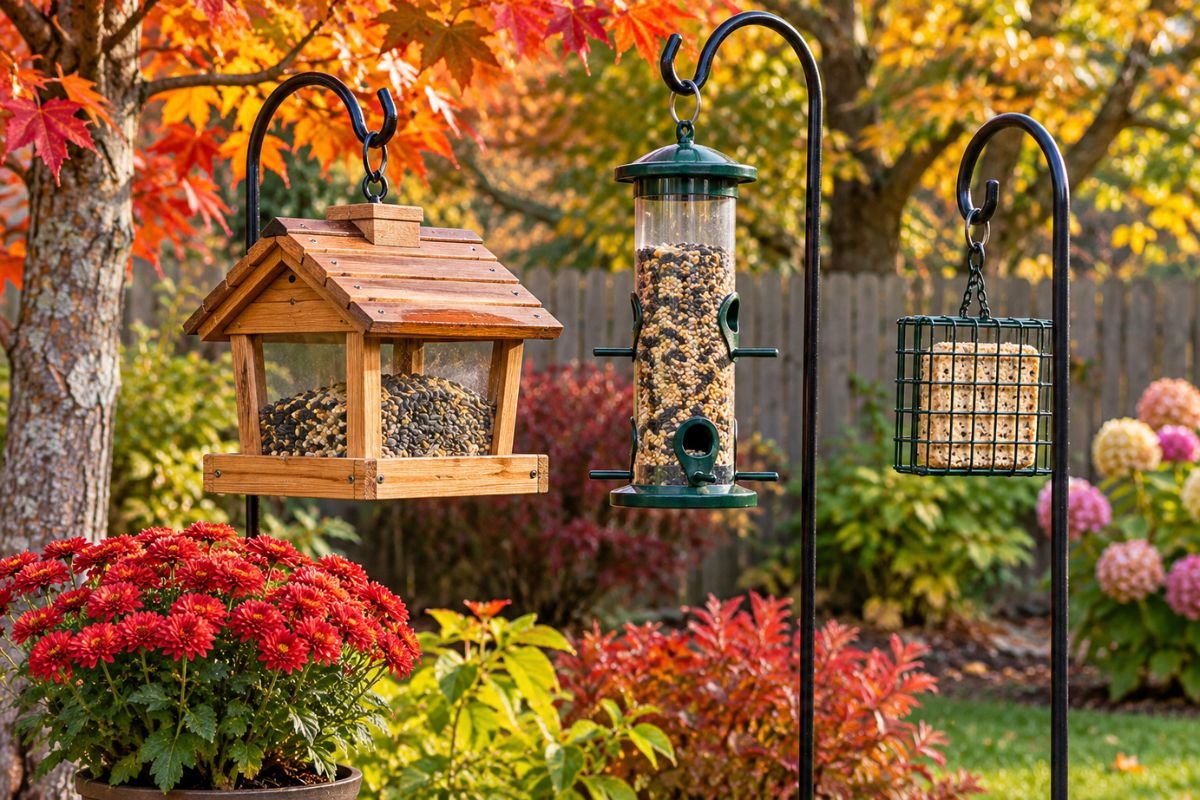
Different bird species have different feeding habits, body sizes, and preferences for how they access food. Project FeederWatch explains that feeder design directly affects which birds visit and which ones stay away. A tube feeder with small ports selects for small-billed birds like finches and chickadees. A platform feeder with an open tray attracts ground-feeding species like juncos, doves, and sparrows. A suet cage brings in woodpeckers, nuthatches, and Carolina Wrens.
Getting this wrong means buying a feeder that sits empty, or one that only attracts the birds you were trying to avoid. Getting it right means a steady stream of visitors from your first fill. The goal of this guide is to match you with the feeder that fits your yard and your goals.
Tube Feeders: Best for Small Songbirds
Tube feeders are the most common type sold in the United States, and for good reason. They are versatile, easy to hang, and work well for a wide range of common backyard birds. A tube feeder is a cylindrical container with multiple feeding ports and perches. Birds cling to the perches and reach in through the ports to pull out seeds one at a time.
Project FeederWatch lists tube feeders as the best option for attracting finches, chickadees, titmice, and nuthatches. The key variable is port size. Small ports with short perches are designed for small birds and will naturally exclude larger species like jays and grackles. If keeping larger birds off is a priority, a tube feeder with short perches is one of the simplest solutions available.
For goldfinches specifically, choose a Nyjer tube feeder. Nyjer seed, also called thistle seed, is tiny and oily, and it requires a feeder with very small ports to prevent spilling. Cornell notes that American Goldfinches strongly prefer Nyjer seed over other options, and a dedicated Nyjer feeder is one of the most reliable ways to bring them in consistently.
One limitation of tube feeders is that seed can get stuck or go damp at the bottom of the tube without the birds reaching it. Look for a tube feeder with a removable base so you can clean it easily and check for old seed. Mold at the bottom of a tube feeder is a common problem in spring and summer when humidity is high.
Platform and Tray Feeders: Best for the Widest Variety
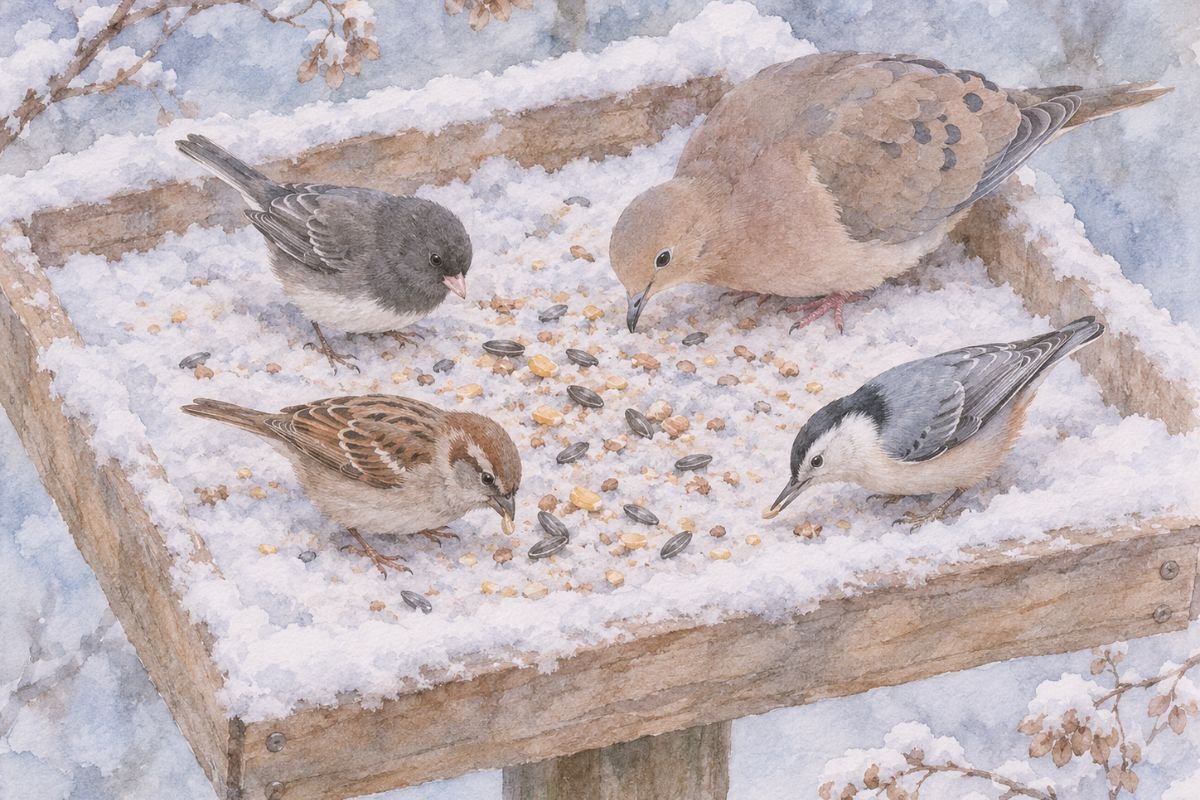
If you want to attract the greatest number of species, a platform feeder is the single best option. Project FeederWatch consistently finds that open tray feeders attract more bird species than any other feeder type. The flat, open surface works for birds of every size, from tiny sparrows to large Blue Jays and even Mourning Doves.
Platform feeders work because they mimic natural ground feeding. Many birds, including juncos, towhees, sparrows, and doves, prefer to eat from a flat surface or the ground rather than clinging to a perch. A platform feeder brings these species up off the ground, which makes them easier to watch and keeps the food slightly cleaner than ground scatter feeding.
The main downside of a platform feeder is exposure. Because the seed sits out in the open, it gets wet in rain and can spoil quickly. Choose a platform feeder with a screen or mesh bottom rather than a solid floor. The mesh allows water to drain through and air to circulate under the seed, which keeps it drier and reduces mold. Cornell recommends checking and refreshing the seed on a platform feeder more frequently than a covered feeder, especially in wet weather.
Hopper Feeders: Best All-Around Choice for Most Yards
A hopper feeder combines the best features of a tube feeder and a platform feeder. It has a central reservoir that holds a large amount of seed and dispenses it onto a tray as birds feed. The roof keeps rain off the seed, and the tray gives birds of different sizes a place to land. Project FeederWatch lists large hopper feeders as one of the top-performing feeder styles for attracting diverse species.
Cardinals in particular are known to favor hopper feeders. Cornell notes that Northern Cardinals prefer to perch comfortably while feeding and are less likely to use small tube feeders with short perches. A hopper feeder with a wide tray and stable perching space suits them well. For more on what cardinals specifically need, see our guide on how to attract Northern Cardinals.
The main consideration with hopper feeders is cleaning. The enclosed reservoir can trap moisture and develop mold at the bottom if seed sits there too long. Empty and clean the reservoir every two to three weeks, and more often in warm, humid weather. A hopper feeder with a removable bottom panel makes this much easier.
Suet Feeders: Best for Woodpeckers and Clinging Birds
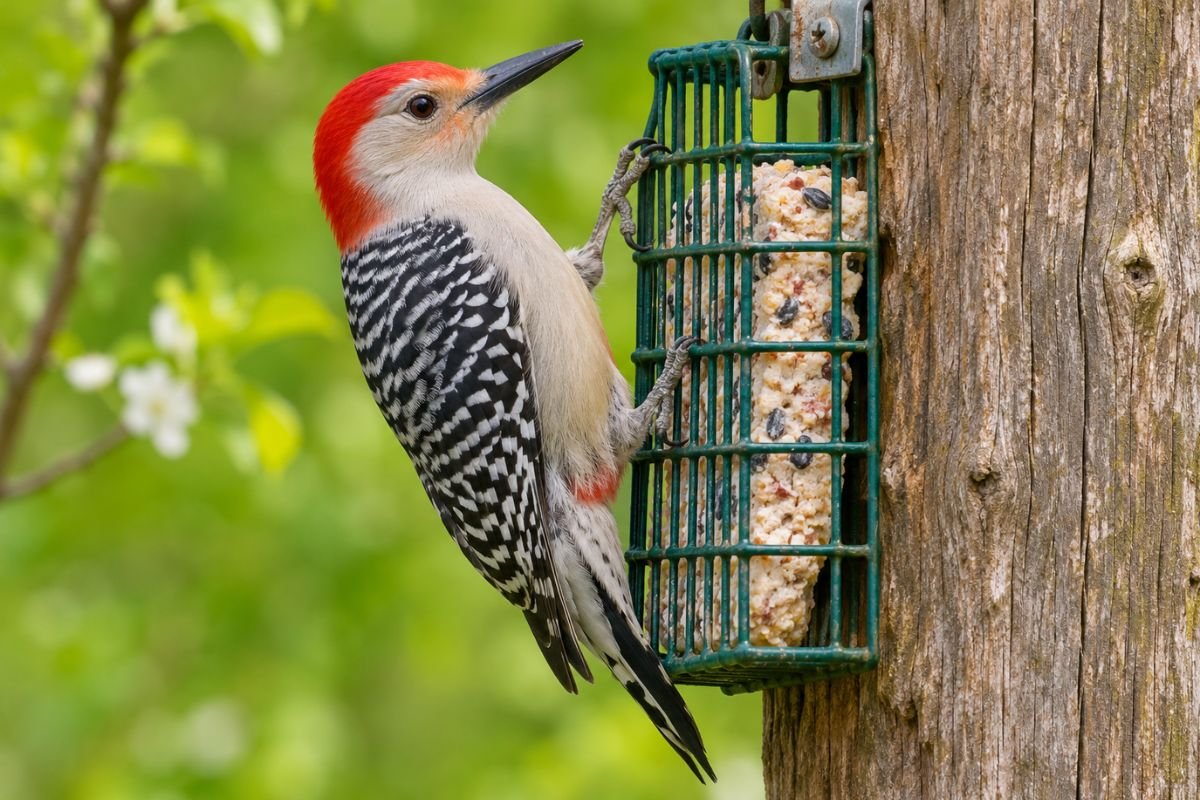
Suet feeders are simple wire or plastic cages that hold a rectangular suet cake. Birds cling to the outside of the cage and peck at the suet through the mesh. Cornell lists suet feeders as the best tool for attracting woodpeckers to the backyard, along with nuthatches, chickadees, and Carolina Wrens.
Suet is rendered animal fat, usually mixed with seeds, nuts, or insects. It is high in calories and especially valuable in winter when birds need extra energy to stay warm. Project FeederWatch notes that Downy Woodpeckers, Hairy Woodpeckers, and Red-bellied Woodpeckers all visit suet feeders regularly, and that adding a suet cage to a yard that already has seed feeders can noticeably increase the number of woodpecker visits.
One thing to watch for is that standard beef suet melts in temperatures above about 70 degrees Fahrenheit. If you plan to keep suet out through spring and summer, choose a no-melt or rendered suet cake specifically designed for warm weather. These hold their shape in heat and do not go rancid as quickly as raw fat.
Hummingbird Feeders: A Category of Their Own
Hummingbird feeders are designed for one purpose: delivering liquid nectar to hummingbirds. They consist of a reservoir that holds the nectar solution and feeding ports that hummingbirds hover in front of to drink. Cornell recommends a simple recipe of one part white granulated sugar dissolved in four parts boiling water, cooled before filling. No red dye, no honey, and no artificial sweeteners.
The most important factor with hummingbird feeders is cleanliness. Nectar ferments quickly in warm weather, and a dirty feeder can grow mold and harmful bacteria that sicken hummingbirds. The National Audubon Society recommends cleaning hummingbird feeders every two to three days in temperatures above 70 degrees, and replacing the nectar at the same time. A feeder that is easy to disassemble and clean is worth more than one that looks impressive but is a hassle to maintain.
Ruby-throated Hummingbirds are the most common hummingbird species in the eastern United States. Cornell says they arrive in the Southeast as early as late February and reach most northern states by May. Set your feeder out a week or two before they are expected in your area to catch early arrivals.
Smart Camera Feeders: Watch Every Visit From Your Phone
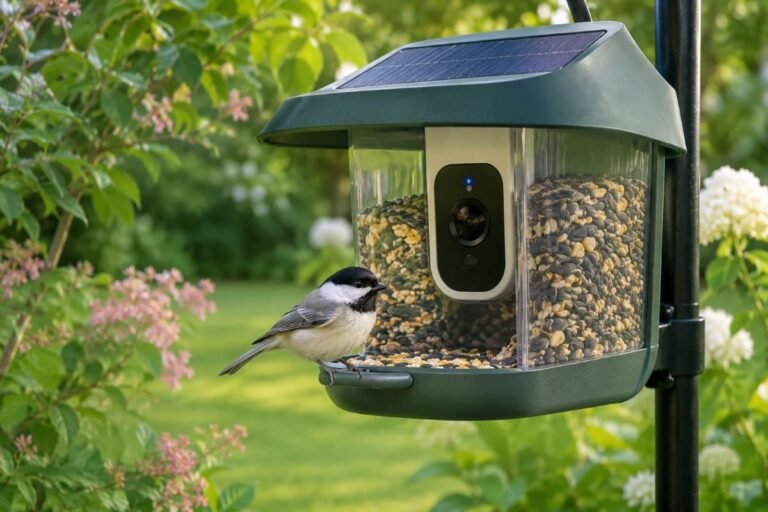
A newer option that has become popular with backyard birders is the smart camera feeder. These are standard seed feeders with a built-in camera that records and identifies every bird that visits. You can watch the footage live from your phone, get alerts when a new species lands, and replay clips later. For anyone who spends time indoors or travels frequently, a camera feeder means you never miss a visit.
The Birdfy smart camera feeder is one of the most popular options available. It uses AI to identify bird species automatically and sends a notification to your phone with the bird’s name and a photo each time a new species visits. The feeder itself functions as a standard hopper feeder, so you are not giving up seed capacity for the camera. You can read more about how smart feeders work in our Smart Feeders section.
Feeder Placement: Where You Put It Matters as Much as What You Buy
The best feeder in the wrong location will underperform. Cornell and Audubon both emphasize placement as one of the most important factors in feeder success. The main rules are straightforward.
Place feeders either within 3 feet of a window or more than 30 feet away. This reduces the risk of window collisions. A feeder very close to the glass removes the momentum that makes a window strike dangerous. One placed far from the house gives birds enough space to steer clear of the glass entirely. The danger zone is the range in between, where birds pick up speed before they see the reflection.
Position feeders near cover. Birds feel safer when they have a tree or dense shrub within easy gliding distance. They use the cover to perch and scan for predators before coming in to feed. A feeder in the middle of an open lawn far from any tree or shrub will get fewer visits than one placed near natural vegetation. Cornell recommends a distance of about 10 feet from shrubs or brush piles as a good balance: close enough for birds to feel safe, far enough that cats cannot use the brush as a hiding spot to ambush feeding birds.
How Many Feeders Should You Start With
If you are just starting out, one feeder is enough. The temptation is to buy several different types at once, but starting with one lets you learn what birds are in your area, how quickly they go through seed, and how much maintenance you are comfortable with before investing in more equipment.
Project FeederWatch recommends starting with a hopper feeder or a platform feeder filled with black oil sunflower seed. Black oil sunflower is the single food taken by the widest variety of backyard birds. It works in almost any feeder type and will draw birds while you decide what to add next.
Once you have one feeder working well, consider adding a second in a different part of the yard. Two feeders in different locations reduce competition between species and give shy birds a chance to feed without being displaced by more aggressive ones. Blue Jays and Red-bellied Woodpeckers, for example, will often drive smaller birds off a shared feeder. A separate station keeps the peace and brings in more species overall. For more on how to manage this, see our guide on how to attract Blue Jays without crowding out other birds.
Feeder Maintenance: The Part Most People Underestimate
A dirty feeder is worse than no feeder. Cornell warns that seed feeders can become a source of disease when not cleaned regularly, spreading illness among the birds that share them. Salmonella, aspergillosis, and house finch eye disease are among the conditions that have been linked to dirty feeders in published research.
The basic cleaning routine is straightforward: empty the feeder completely, wash it with a ten percent bleach solution, rinse thoroughly, and let it dry completely before refilling. Do this at least once a month in winter and every two weeks in warmer months. Remove and discard any seed that is wet, clumped, or smells off. Old seed under a feeder can grow mold and attract rodents, so rake the area beneath the feeder regularly.
If you are not sure how often birds are visiting or whether the seed is staying fresh, a camera feeder from Birdfy takes the guesswork out of it. You can check the seed level and spot any problems from your phone without going outside, which makes it easier to stay on top of maintenance between visits.
Quick Guide: Which Feeder for Which Bird
- Tube feeder (small ports): American Goldfinch, House Finch, Black-capped Chickadee, Tufted Titmouse
- Tube feeder (Nyjer): American Goldfinch, Pine Siskin, Common Redpoll
- Platform or tray feeder: Dark-eyed Junco, Mourning Dove, White-throated Sparrow, Blue Jay, Northern Cardinal
- Hopper feeder: Northern Cardinal, Blue Jay, White-breasted Nuthatch, Carolina Wren, House Sparrow
- Suet cage: Downy Woodpecker, Hairy Woodpecker, Red-bellied Woodpecker, White-breasted Nuthatch, Carolina Wren
- Hummingbird nectar feeder: Ruby-throated Hummingbird, Baltimore Oriole (larger feeder ports needed)
- Smart camera feeder: Any species — adds identification and monitoring to any standard feeding setup
Final Thoughts
The best bird feeder is the one you will keep clean and filled. A simple hopper feeder with black oil sunflower seed, placed near cover and away from danger zones, will outperform an expensive specialty feeder that gets neglected. Start simple, watch what comes, and add more feeders and food types as your interest grows. The birds will follow.
Sources
- Project FeederWatch: Feeder Types (feederwatch.org)
- Project FeederWatch: Food Types (feederwatch.org)
- All About Birds: Attract Birds to Your Yard (allaboutbirds.org)
- National Audubon Society: How to Feed Backyard Birds (audubon.org)
- All About Birds: Ruby-throated Hummingbird (allaboutbirds.org)