How to Attract Hummingbirds to Your Backyard
This post contains affiliate links. If you buy through them, Birdstyl may earn a small commission at no extra cost to you. Read our Affiliate Disclosure.
Why Hummingbirds Are Worth Attracting to Your Yard
Few backyard visitors generate as much excitement as hummingbirds. These tiny birds — most weighing less than a nickel — beat their wings up to 80 times per second, hover in midair, and flash iridescent colors that seem almost unreal in direct sunlight. Once you attract hummingbirds to your yard, they tend to return season after season to the same feeders and flowers.
The good news is that drawing hummingbirds in doesn’t require a large yard or a complicated setup. What it does require is knowing what hummingbirds actually look for: reliable nectar sources, the right colors, safe perches, and water. This guide walks you through everything, from choosing the right feeder to planting a hummingbird garden that works all season long.
What Hummingbirds Need to Visit Your Yard
Hummingbirds are driven by one primary need: food. They consume more than half their weight in nectar and insects every single day. Their metabolism runs so fast that they must feed every 10 to 15 minutes during daylight hours. This means that if your yard consistently offers nectar, hummingbirds will not only visit — they will treat it as a regular stop on their daily circuit.
Beyond food, hummingbirds need three other things: water for bathing, perching spots to rest and watch their territory, and shelter nearby so they feel safe. A yard that covers all four of these elements will attract hummingbirds far more reliably than one that offers only a feeder.
How to Set Up a Hummingbird Feeder the Right Way
The single most effective thing you can do to attract hummingbirds is hang a clean nectar feeder in a visible spot. Here is what matters most:
Choose a feeder with red accents. Hummingbirds are strongly attracted to the color red. You do not need to add red dye to the nectar itself — the red parts of the feeder are enough to catch their attention from a distance. Avoid feeders with yellow bee guards, as yellow attracts insects that can contaminate the nectar.
Place the feeder in partial shade. Full sun causes nectar to ferment quickly, which can make hummingbirds sick. A spot that gets morning sun and afternoon shade is ideal. Hang it where you can see it from a window, since watching hummingbirds feed is half the reward.
Hang it at eye level or higher. Hummingbirds feel more confident feeding at a height where they can spot predators easily. Around five to six feet off the ground works well. Keep it away from windows to prevent collisions.
Place a perch nearby. Male hummingbirds especially like to perch close to a feeder and guard it from other hummingbirds. A thin branch, a shepherd’s hook, or even a simple wire nearby gives them a spot to rest and watch.
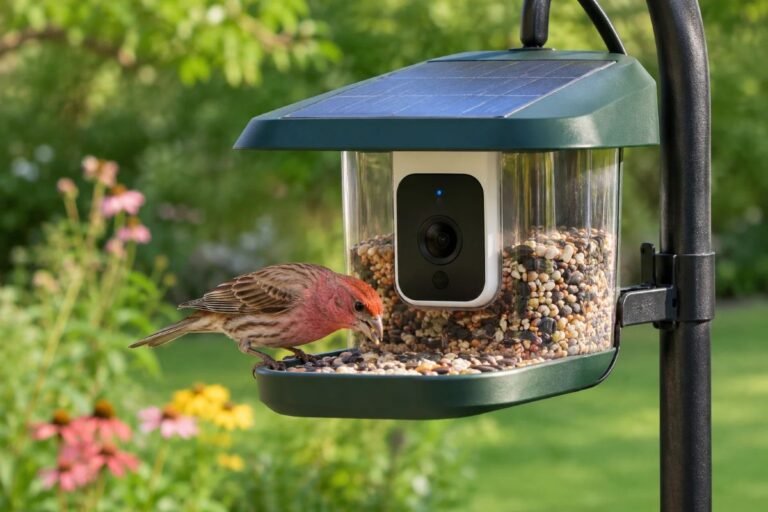
If you want to monitor your feeders — and spot hummingbirds the moment they arrive — a smart bird feeder with a camera makes it easy to watch activity in real time, even when you’re not at the window. The Birdfy smart feeder uses AI to identify species automatically, so you will know exactly when hummingbirds start visiting your yard.
Making the Perfect Hummingbird Nectar at Home
Store-bought nectar often contains red dye and preservatives that hummingbirds do not need and that may cause harm over time. The simplest and safest nectar recipe is also the most effective one:
Hummingbird nectar recipe: Mix 1 part plain white sugar with 4 parts water. Bring to a gentle boil to dissolve the sugar and reduce bacteria, then let it cool completely before filling your feeder.
That’s it. No red dye, no honey (honey ferments and can cause a fatal fungal infection), no brown sugar, no artificial sweeteners. Only plain white sugar dissolved in water matches the composition of natural flower nectar closely enough to be safe for hummingbirds long-term.
Store extra nectar in the refrigerator for up to two weeks. In warm weather, change the nectar every two to three days before it ferments, even if the feeder looks clean. In hot summer months, change it every one to two days.
How to clean your feeder: Use hot water and a bottle brush. Avoid soap, which leaves a residue hummingbirds can taste. If you see black spots inside the feeder, that is mold — soak the feeder in a diluted white vinegar solution, rinse thoroughly, and let it dry completely before refilling.
Best Plants to Attract Hummingbirds to Your Garden
A feeder brings hummingbirds to your yard. Plants make them stay. Hummingbirds are drawn to tubular flowers in red, orange, and pink, which are shaped perfectly for their long bills and tongues. The following plants are reliable hummingbird magnets across most of the United States:
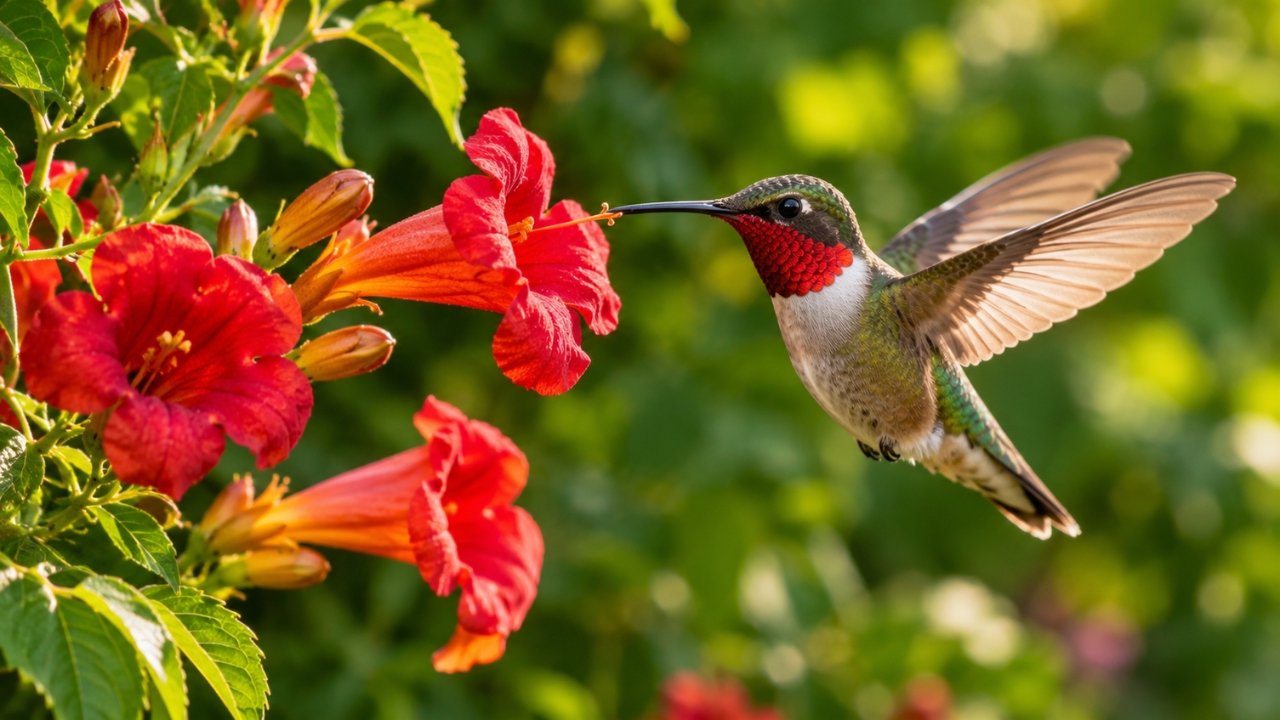
Trumpet vine (Campsis radicans) — This native vine produces clusters of large orange-red trumpet-shaped flowers that hummingbirds will visit dozens of times a day. It grows fast and can cover a trellis or fence in one season. Plant with care, as it spreads aggressively.
Bee balm (Monarda) — Available in red, pink, and purple, bee balm blooms in midsummer and attracts hummingbirds reliably. It is a native perennial that spreads gradually to form a full clump over several years.
Salvia (Salvia species) — Red salvia is one of the top hummingbird plants for good reason: it produces nectar-rich flowers from early summer until frost. Many varieties are annual in cold climates, making them easy to replant each spring.
Coral honeysuckle (Lonicera sempervirens) — This native vine produces slender red and orange tubular flowers beloved by hummingbirds. Unlike the invasive Japanese honeysuckle, coral honeysuckle is well-behaved and grows well on a trellis or fence post.
Cardinal flower (Lobelia cardinalis) — Named for its brilliant red color, cardinal flower blooms in late summer when many other flowers have finished, giving hummingbirds a food source just before migration.
Penstemon — Available in red and coral varieties, penstemon is a native perennial that blooms in early summer and thrives even in dry conditions. Ruby-throated hummingbirds in the East and several western hummingbird species regularly visit penstemon flowers.
Plant these in clusters rather than single specimens. Hummingbirds notice large masses of color more easily from the air, and a cluster of bee balm or salvia will attract more visits than a single plant tucked into the corner of a border.
Which Hummingbirds Will Visit Your Backyard?
The hummingbird species you are most likely to attract depends on where you live:
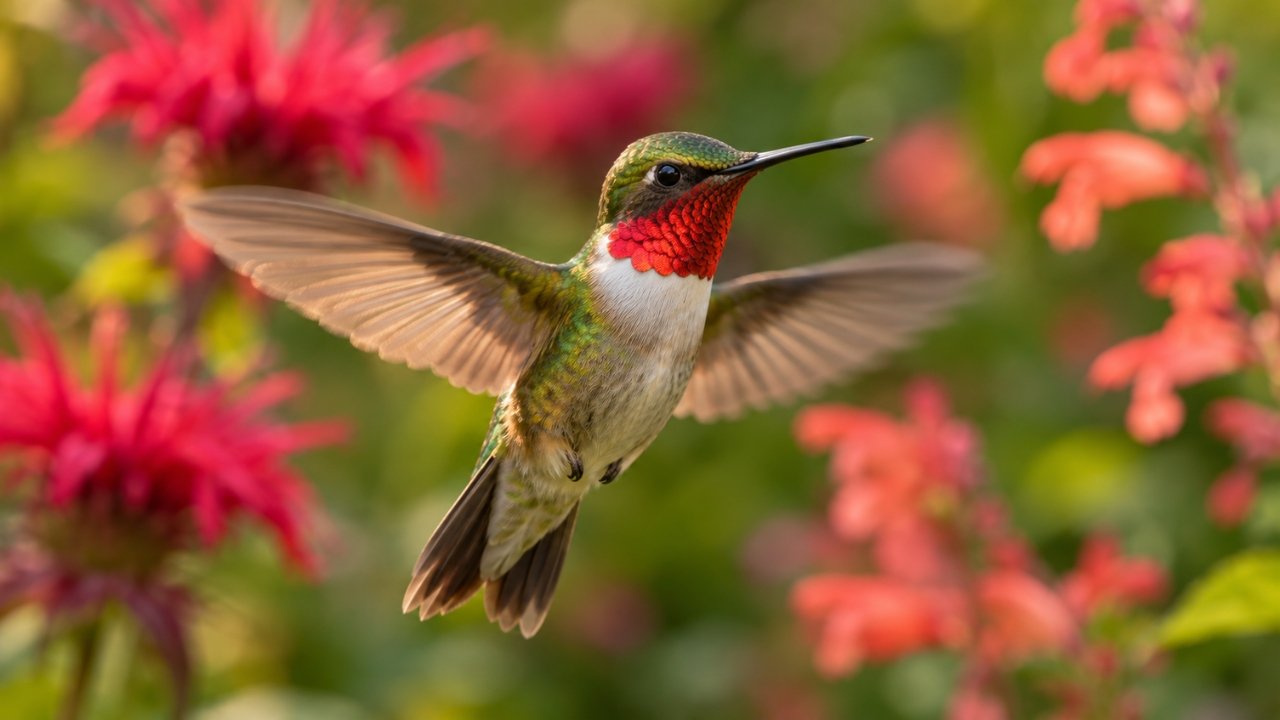
Ruby-throated hummingbird — The only hummingbird species that breeds east of the Mississippi River. Males have a brilliant iridescent red throat (gorget). They arrive in spring as early as late March in the South, reaching as far north as Canada by May. They depart south again in August and September.
Anna’s hummingbird — Found year-round along the Pacific Coast from Baja California to British Columbia, Anna’s hummingbirds are one of the few species that do not migrate. Males have a rose-red head and throat. If you live on the West Coast, there is a good chance Anna’s hummingbirds visit your yard even in winter.
Black-chinned hummingbird — Common across the western United States in summer, the black-chinned hummingbird has a distinctive black throat with a narrow purple band. It is often the most common breeding hummingbird in suburban western gardens.
Rufous hummingbird — A feisty, territorial species that breeds in the Pacific Northwest and Alaska but migrates through much of the western mountain states in late summer. Rufous hummingbirds are known for being aggressive at feeders, chasing other hummingbirds away even when they are significantly smaller.
Broad-tailed hummingbird — Found in mountain meadows and gardens of the Rocky Mountain West, the broad-tailed hummingbird produces a distinctive high-pitched trill with its wings. Males have a rose-red throat and a metallic green back.
When to Put Out Hummingbird Feeders
Timing your feeder setup correctly makes a real difference in how quickly hummingbirds find your yard.
In the East: Put feeders out one to two weeks before ruby-throated hummingbirds typically arrive in your area. In the deep South, that may be late March. In the mid-Atlantic states, mid-April. In New England and the upper Midwest, early May. Having nectar ready when the first hummingbirds pass through on migration increases the chance they will return throughout the season.
In the West: If you have Anna’s hummingbirds, keep feeders up year-round. For migratory species like rufous and black-chinned, set feeders out by early April in most western states.
In fall: Leave feeders up at least two weeks after you see your last hummingbird of the season. Late-migrating individuals — sometimes from western species that occasionally appear in the East — may need that nectar source. Leaving feeders up does not prevent hummingbirds from migrating when they are ready; migration is triggered by day length, not food availability.
Adding Water and Misting to Your Hummingbird Setup
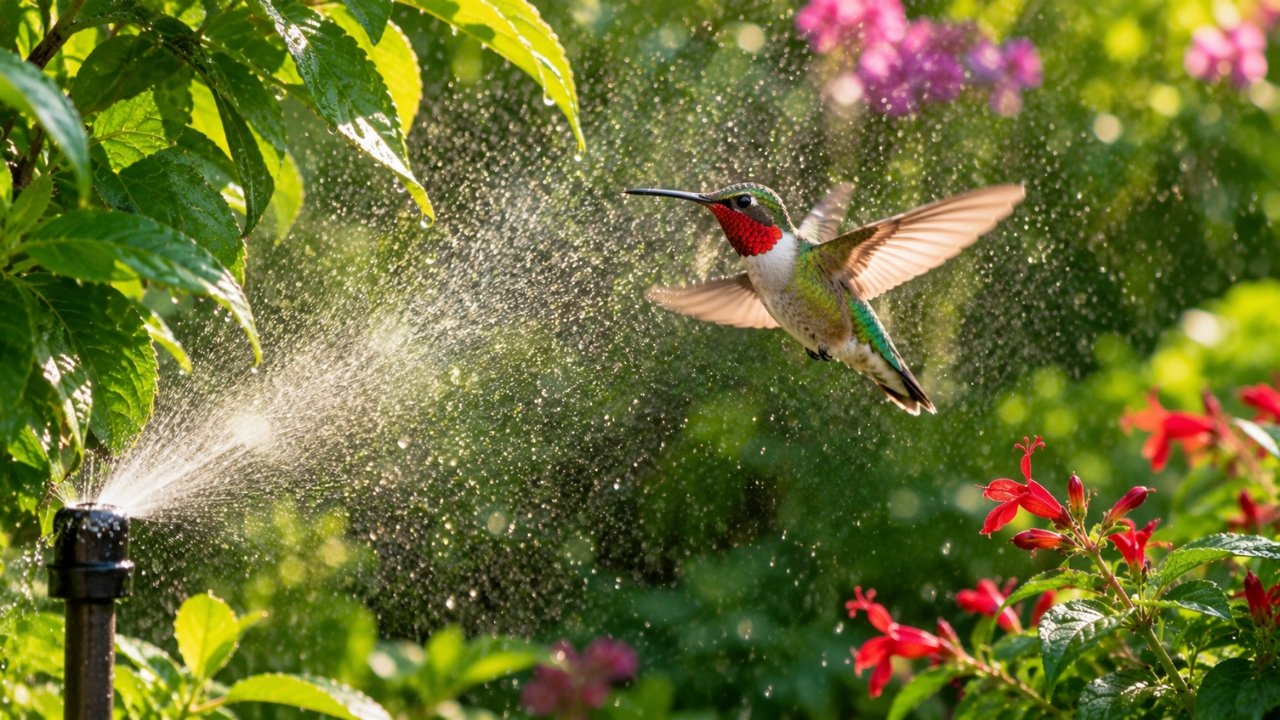
Hummingbirds bathe frequently to keep their feathers in good condition for the demanding flight patterns they perform all day. Unlike most birds, they prefer to bathe in very shallow moving water or fine mist rather than a deep birdbath.
The easiest water feature to add for hummingbirds is a misting sprinkler or misting fountain. Set it up near nectar flowers or your feeder. Hummingbirds will fly through the mist repeatedly, then perch on a nearby branch to preen. A small solar-powered fountain or a simple garden mister attached to your hose both work well.
If you use a traditional birdbath, fill it with just one inch of water and change it daily. A shallow dish placed on the ground or on a low surface works better than a standard deep birdbath for hummingbirds.
How to Get More Hummingbirds: Practical Tips That Work
Use multiple feeders. Dominant males will guard a single feeder and chase other hummingbirds away. Placing two or three feeders out of sight of each other — on different sides of your house or at different heights — means more hummingbirds get to feed, since one bird cannot guard them all at once.
Keep feeders consistently filled. Hummingbirds remember reliable food sources and return to them on a predictable schedule. An empty feeder teaches them that your yard is not dependable. During peak season, check your feeders daily.
Add red accents nearby. Tie a red ribbon near your feeder when you first put it up to draw attention to it. Once hummingbirds find it, they will remember its location even without the ribbon.
Reduce pesticide use. Hummingbirds eat small insects and spiders as their primary protein source. A yard where insects have been eliminated by pesticides offers incomplete nutrition for hummingbirds. Reducing or eliminating pesticide use means more insects — and healthier hummingbirds.
Track your sightings with a smart feeder. One of the most common questions backyard birders have is: “Have the hummingbirds arrived yet?” A smart bird feeder camera like the Birdfy sends you a notification the moment a hummingbird lands, with a photo and species identification. You never miss a first arrival again, and you can track exactly how many individuals visit throughout the season.
Common Mistakes to Avoid When Attracting Hummingbirds
Using red dye in nectar. There is no evidence that red-colored nectar attracts more hummingbirds, and some studies suggest certain dyes may cause harm over time. The red parts of the feeder are sufficient. Stick to plain white sugar and water.
Letting nectar sit too long. Fermented nectar can cause yeast and bacterial growth that makes hummingbirds sick. In warm weather, two to three days is the maximum. When in doubt, replace it.
Placing the feeder too close to windows. Window collisions kill hundreds of millions of birds in North America each year, including hummingbirds. Place feeders either within three feet of a window (so a bird startled from the feeder cannot build up enough speed to injure itself) or more than ten feet away.
Taking feeders down too early in fall. As mentioned above, late migrants can still appear weeks after your regular hummingbirds depart. Keep feeders up and filled until at least two weeks after your last sighting of the season.
Planting only one type of flower. A diverse planting that blooms at different times from spring through fall gives hummingbirds a food source across their entire residency. A yard that peaks in June but has nothing by August offers a much shorter window of visits.
Starting Small: What to Do First
If you are just getting started attracting hummingbirds, do not try to do everything at once. Begin with one clean feeder, filled with fresh homemade nectar, placed in a shaded spot where you can see it from inside your home. That single step is often enough to bring your first hummingbird visitor within a week or two of their seasonal arrival.
Once you have established a reliable feeding spot, add a few red tubular flowers near the feeder, then a misting water feature, and gradually expand your plantings each year. Within two to three seasons, a yard that started with one feeder can become a genuine hummingbird habitat that dozens of birds visit throughout the summer.
The most important thing is consistency. Hummingbirds reward patience and reliability. Keep your feeder clean, your nectar fresh, and your flowers blooming, and they will find you.
Sources
Cornell Lab of Ornithology — All About Birds: Ruby-throated Hummingbird
National Audubon Society — Hummingbird Field Guide
U.S. Fish and Wildlife Service — Hummingbirds of the United States
American Bird Conservancy — Window Collision Data