How to Attract Woodpeckers to Your Backyard
This post contains affiliate links. If you buy through them, Birdstyl may earn a small commission at no extra cost to you. Read our Affiliate Disclosure.
Few backyard visitors are as fun to watch as a woodpecker. One minute the yard is quiet, and the next a black and white bird is hitching up the trunk of your maple, tapping the bark and checking every crack for insects. Woodpeckers are also loyal. Once a pair finds a reliable food source and a safe tree, they often stay around the same yard through every season of the year.
The good news is that woodpeckers are not hard to attract once you understand what they need. They want high energy food, trees they can climb and dig into, a place to raise their young, and clean water. This guide walks you through each of those needs, the species you are most likely to see in the United States, and the small mistakes that send woodpeckers to your neighbor’s yard instead.
5 Woodpeckers You Can Attract to Your Yard
There are more than 20 woodpecker species in the United States, but only a handful show up regularly in suburban yards. Knowing which birds you are trying to attract helps you choose the right food and the right feeder.
Downy Woodpecker
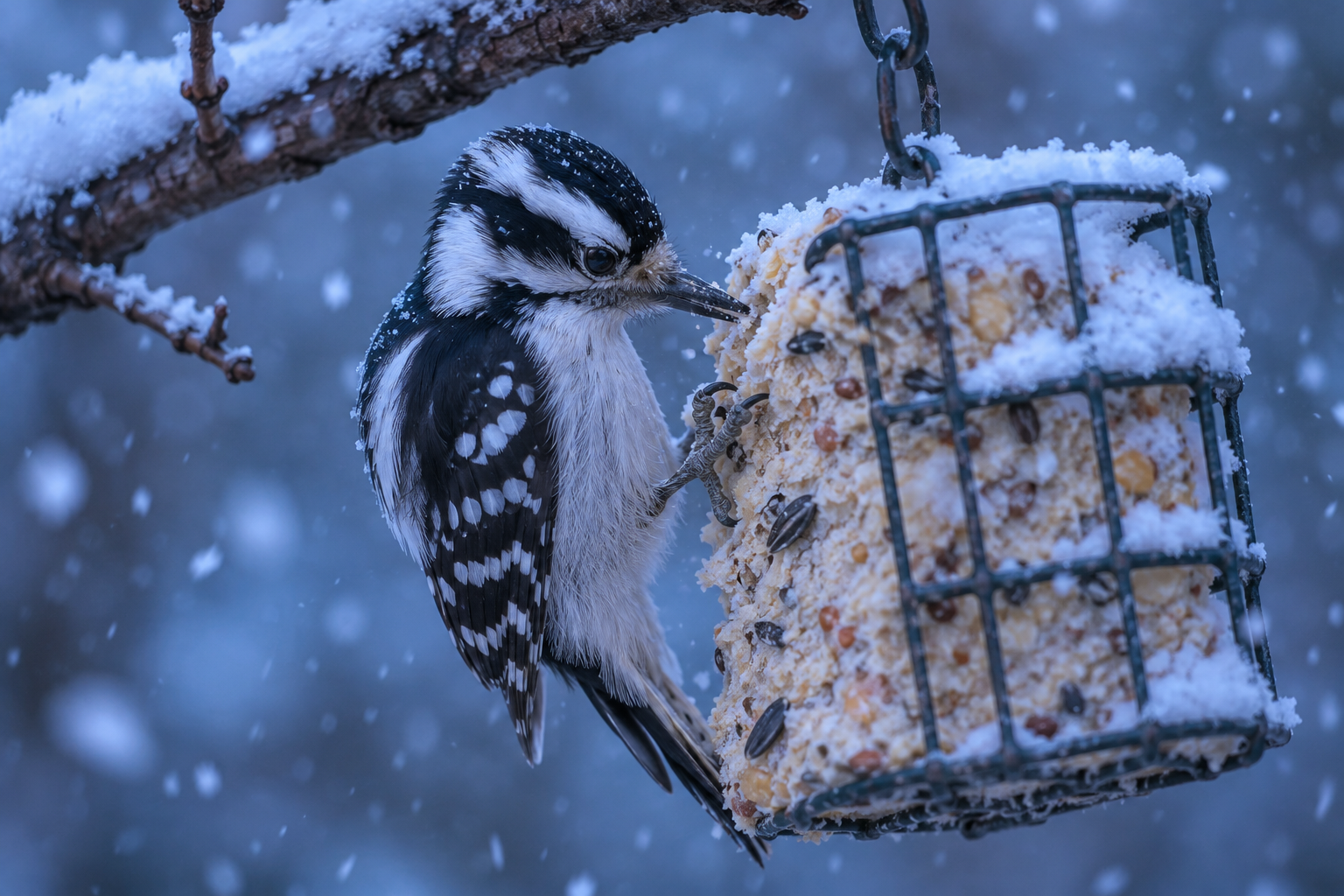
The Downy is the smallest woodpecker in North America, only about 6 to 7 inches long, roughly the size of a house sparrow. It is the species most people see first because it visits suet feeders, seed feeders and even the sturdy stems of garden plants. Males have a small red patch on the back of the head.
Hairy Woodpecker
The Hairy looks almost exactly like a large Downy, which confuses many beginners. The easiest clue is the bill. On a Downy, the bill is short, about one third the length of the head. On a Hairy, the bill is long and strong, almost as long as the head itself. Hairy Woodpeckers are also bigger, around 9 inches, and their white outer tail feathers lack the small black bars you can see on a Downy. If you want more help with look alike species, our guide on how to identify 12 common backyard birds at your feeder covers the basics.
Red-bellied Woodpecker
Despite the name, the most visible color on this bird is the bright red cap and nape, not the belly. The pale reddish wash on its belly is hard to see unless the bird is clinging to a feeder. Red-bellied Woodpeckers are common across the eastern half of the country and are bold, noisy visitors at suet and peanut feeders.
Northern Flicker
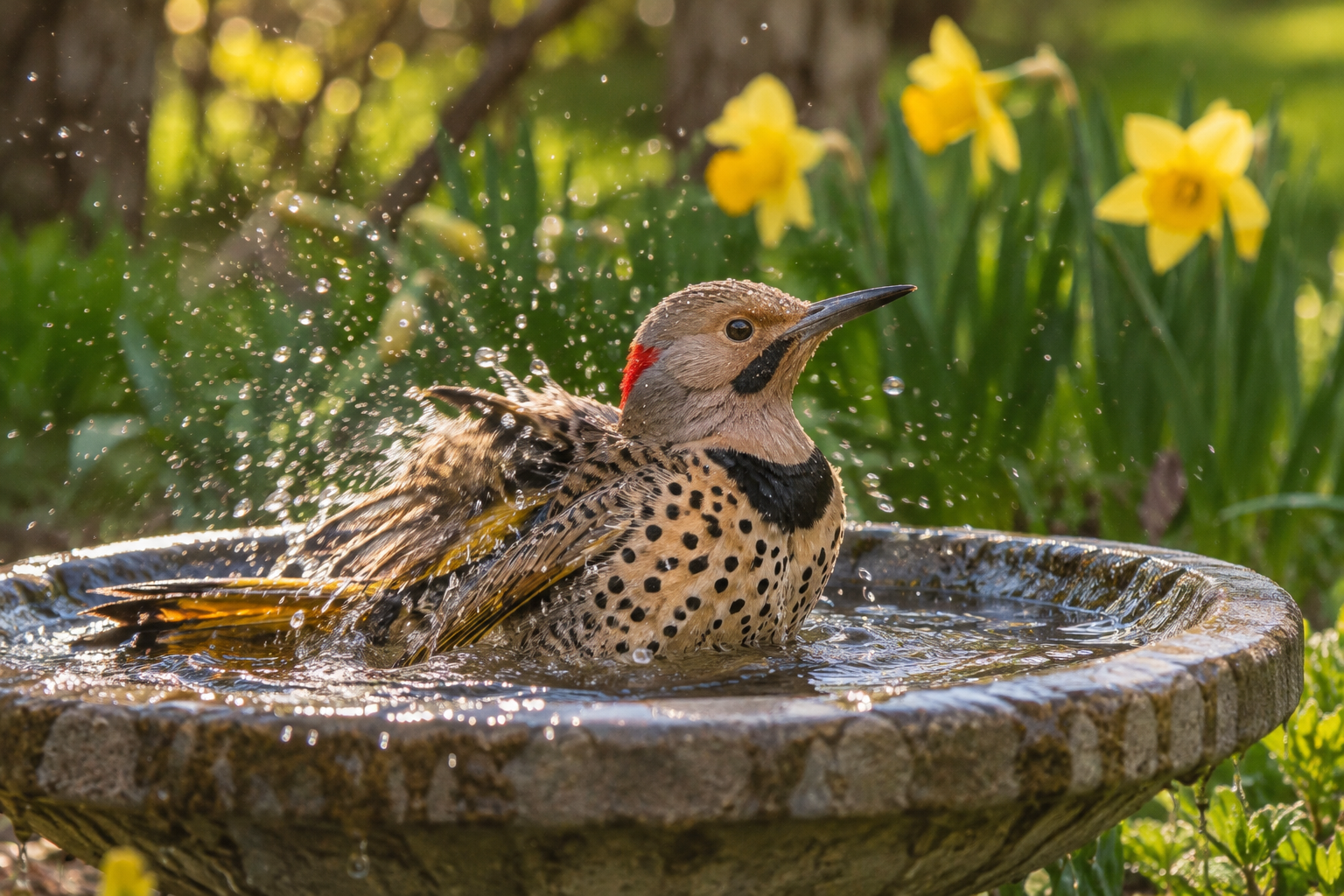
The Northern Flicker is a large brown woodpecker with a spotted belly, a black crescent on the chest and a white rump patch that flashes when it flies. Unlike most woodpeckers, flickers spend a lot of time on the ground, where they dig for ants and beetles. A lawn that is not heavily treated with pesticides gives them a good reason to stop by.
Pileated Woodpecker
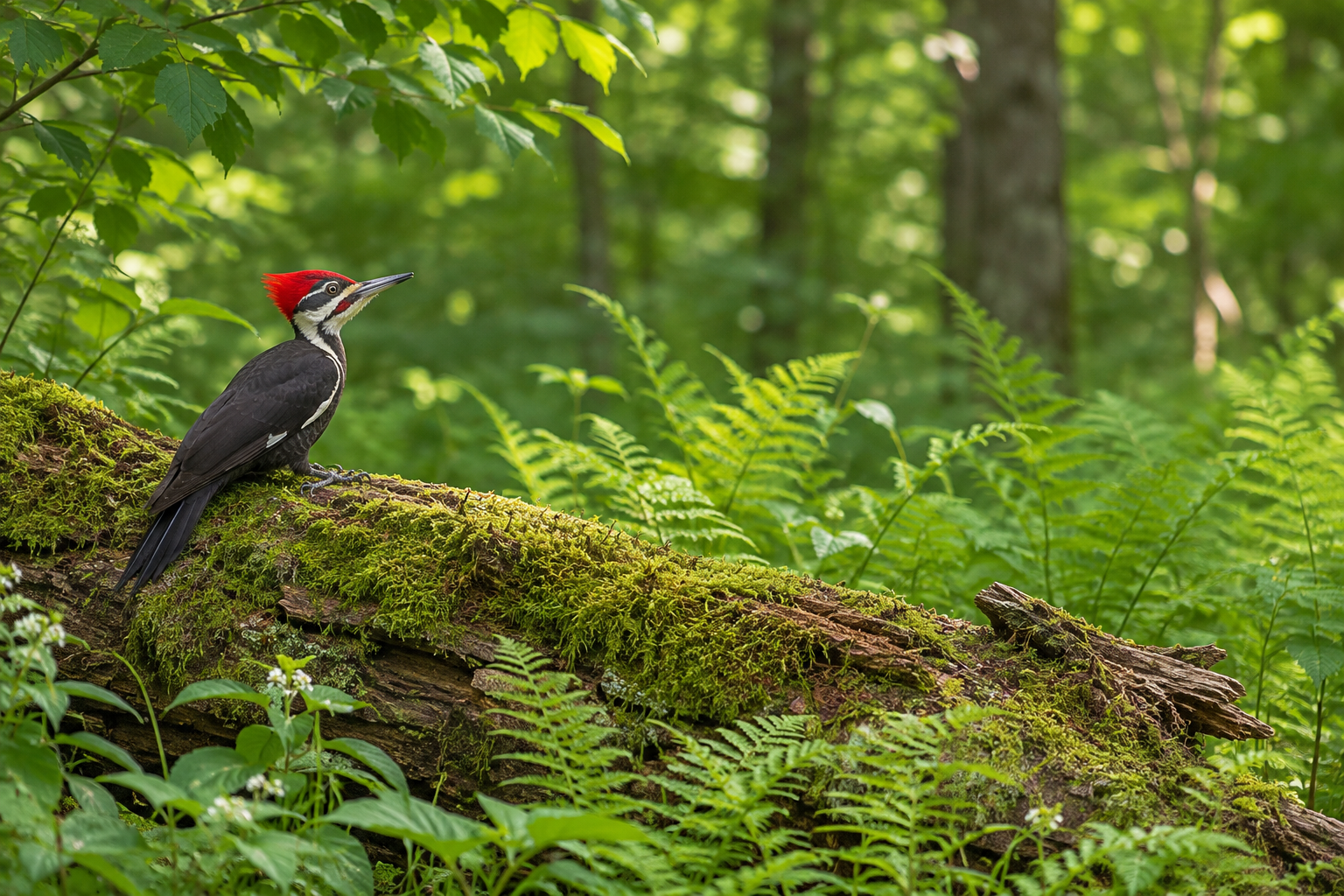
The Pileated is the showstopper. About the size of a crow, with a flaming red crest, it is the largest common woodpecker in North America. It needs mature forest nearby, so you are more likely to see it in wooded neighborhoods. You can often spot its presence by the large rectangular holes it chisels into dead trees, which can be more than a foot long.
Why Suet Is the Best Food for Woodpeckers
In the wild, woodpeckers eat mostly insects, larvae and insect eggs hidden in bark and dead wood. Suet is the closest thing you can offer to that rich, fatty diet. It is made from animal fat, often mixed with seeds, nuts, corn or dried fruit, and it gives woodpeckers a dense source of energy, especially in cold weather when insects are hard to find.
Most experienced backyard birders agree that a suet feeder is the fastest way to bring woodpeckers to a yard. Downy, Hairy and Red-bellied Woodpeckers usually find a new suet cake within a few days or a few weeks, depending on how many trees grow nearby.
Choose the Right Type of Suet
Plain suet cakes work very well from late fall to early spring. In warm months, look for no melt suet or suet dough, which is made to hold its shape in the heat. Soft melted fat can coat feathers and make it harder for birds to stay clean and dry, so during a heat wave it is wiser to offer small amounts that birds finish in a day or two. For a full list of cold weather foods, see our article on what to feed birds in winter.
Keep It Fresh
Suet can go rancid, especially in direct sun. Replace any cake that smells sour, looks moldy or has turned soft and greasy. Buying smaller packs and storing the extras in a cool place helps you always offer fresh food.
4 Other Foods That Bring Woodpeckers Closer
Suet is the star, but woodpeckers have a wider menu than many people realize. Adding one or two of these foods can bring in birds that ignore suet, and it keeps your regular visitors coming back.
Shelled Peanuts
Unsalted, shelled peanuts are a favorite of Red-bellied and Downy Woodpeckers. Offer them in a sturdy mesh peanut feeder so birds have to work a little to pull out each piece, which stops larger birds from emptying the feeder in minutes.
Black Oil Sunflower Seeds
Many woodpeckers will take sunflower seeds, especially hulled sunflower hearts. A tube feeder with large ports or a hopper feeder with a solid frame gives them a place to grip while they eat.
Fruit
Chopped apples, grapes, orange halves and berries attract Red-bellied Woodpeckers and flickers, particularly in fall and spring. Place fruit on a platform feeder and remove anything that is left after a day.
Peanut Butter Spread
A thin layer of bird safe peanut butter spread, pressed into the bark of a tree or into the holes of a log feeder, copies the way woodpeckers naturally search for food. Choose a product made for wild birds, without added sugar or salt.
How to Choose and Place a Woodpecker Feeder
Woodpeckers feed differently from finches and sparrows. They cling to vertical surfaces and use their stiff tail feathers as a brace, the same way they climb a tree trunk. A feeder that lets them do this will be visited far more often.
Look for a Tail Prop
A tail prop suet feeder has a long panel under the suet cage. Larger woodpeckers such as the Hairy, Red-bellied and Pileated can rest their tail on it and feed comfortably. Small suet cages work for Downy Woodpeckers, but bigger birds often leave after a few seconds because they cannot balance.
Place It Near a Tree Trunk
Woodpeckers feel safer when a trunk or a large branch is close by. Hang the feeder on a tree, or on a pole placed near mature trees, so the birds can move from the bark to the feeder and back without crossing open lawn. If you are still comparing models, our guide on how to choose the best bird feeder for your backyard explains which designs hold up best outdoors.
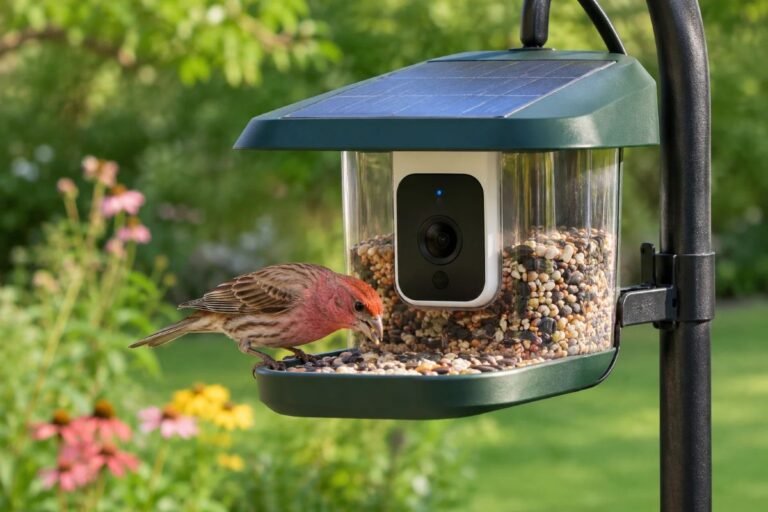
If you would also like to see who is visiting, a smart bird feeder with a built in camera placed near the same tree lets you watch your woodpeckers without stepping outside and scaring them away.
Protect It From Squirrels
Squirrels love suet as much as woodpeckers do. A baffle on the pole, or a cage style feeder that only lets birds reach the food, keeps your suet from disappearing overnight.
Leave Dead Trees Standing for Nesting and Food
If there is one habitat change that helps woodpeckers more than any feeder, it is keeping dead or dying trees, called snags. Woodpeckers can drill into live wood, but a tree with a soft, decaying center is much easier to excavate for a nest. Snags are also full of beetle larvae and other insects, which turns them into a natural feeding station.
Wildlife agencies such as Texas Parks and Wildlife recommend leaving dead trees standing whenever it is safe, especially snags more than 6 inches across or ones that already have woodpecker holes. If a dead tree is too close to your house, ask an arborist about cutting it down to a tall, safe trunk instead of removing it completely. Even a large dead branch left on a living tree can become a drumming post or a feeding spot.
Old cavities do not go to waste. When woodpeckers move on, chickadees, bluebirds, nuthatches and other cavity nesting birds often move into the holes they leave behind, so one snag can support several species over the years.
When to Put Up a Woodpecker Nest Box
Most woodpeckers prefer to dig their own nest, but some species will use a nest box, especially when natural cavities are scarce. The Northern Flicker is the best known example. Its population has declined over the long term, and the loss of dead trees near homes and competition with European Starlings for nest holes are among the possible reasons.
A flicker box should be deep and packed with wood chips, not sawdust. Flickers like to dig out the chips themselves, which copies the work of excavating a real cavity. Mount the box on a tree trunk or a sturdy post before the breeding season begins, which means late winter in most of the United States. Red-bellied and Downy Woodpeckers occasionally accept boxes as well, especially when they are filled with wood chips in the same way.
There is a bonus for homeowners too. Woodpeckers are territorial, and a pair that has a good tree or box to nest in is less likely to start drilling into the siding of your house.
Give Woodpeckers Fresh Water All Year
Woodpeckers drink and bathe like other birds, and a clean water source can be the detail that turns a quick visit into a daily routine. A bird bath with a shallow, rough bottom works well. In winter, a heated bird bath is one of the most valuable things you can offer, because open water is hard to find once ponds and puddles freeze. Rinse and refill the bath every few days so the water stays clean and inviting.
7 Mistakes That Keep Woodpeckers Away From Your Yard
Even with good food and plenty of trees, a few common habits can quietly push woodpeckers away. Check your yard for these:
- Using a tiny suet cage with nothing to lean on, so larger woodpeckers cannot balance.
- Hanging feeders in the middle of an open lawn, far from any tree trunk.
- Leaving old, rancid or moldy suet in the feeder for weeks.
- Removing every dead tree and fallen log from the property.
- Spraying insecticides on trees and lawns, which wipes out the insects woodpeckers depend on.
- Letting squirrels and starlings take over the suet feeder without adding a baffle or a cage.
- Giving up too soon, because woodpeckers may need a few weeks to trust a new feeder, especially in a yard with few trees.
Fixing even two or three of these problems often makes a visible difference within one season.
Watch Your Woodpeckers Up Close
Woodpeckers can be shy, and many of their visits happen early in the morning while you are still inside. A camera feeder solves that problem. It sends a notification and a short video to your phone when a bird lands, which makes it easy to learn the difference between a Downy and a Hairy or to catch the first flicker of spring.
If you are wondering whether a camera feeder is right for you, read our honest guide on whether smart bird feeders are worth it. When you are ready, you can compare the Birdfy camera feeders and pick the model that fits your yard and your budget.
Final Thoughts
Attracting woodpeckers comes down to four things: rich food like suet and peanuts, a feeder they can cling to near a tree, natural habitat such as snags and old trees, and fresh water. Start with one good suet feeder this week, leave that old dead branch in place, and keep the food fresh. With a little patience, you may soon hear the steady tapping of a Downy or the loud call of a flicker right outside your window.
If you enjoy colorful backyard visitors, you might also like our guide on how to attract cardinals to your backyard.
Sources
National Audubon Society, How to Tell a Hairy Woodpecker From a Downy Woodpecker
Delaware Nature Society, How to Tell Downy and Hairy Woodpeckers Apart
Texas Parks and Wildlife Department, Save a Snag for Wildlife
USDA Forest Service, Woodpecker Damage: A Simple Procedure to Prevent It
Bedford Audubon Society, Northern Flicker
Bird Watcher’s Digest, Top Four Foods to Attract and Feed Woodpeckers