How to Keep Squirrels Away From Bird Feeders
This post contains affiliate links. If you buy through them, Birdstyl may earn a small commission at no extra cost to you. Read our Affiliate Disclosure.
You fill the feeder in the morning, and by afternoon it is empty. A gray squirrel hangs upside down from the perch, stuffing its cheeks, while the chickadees and cardinals wait in the shrubs. If that sounds familiar, you are in good company. Squirrels are clever, athletic and stubborn, and almost every backyard birder has to deal with them at some point.
The good news is that you can win most of the battle without hurting anyone. This guide explains why squirrels are so hard to stop, where to place your feeder, 5 tools that work, which seeds squirrels dislike, and what to do with the mess underneath. You will also find the mistakes that hand the squirrels an easy win.
Why Squirrels Are So Good at Raiding Feeders
Squirrels are built for this job. They can jump about 3 to 5 feet straight up and 7 to 10 feet sideways, they climb poles and trees with ease, and they run along wires without a problem. They are also very observant. An ornithologist at the Cornell Lab of Ornithology once watched squirrels study a feeder with a baffle until they found a way around it.
That is why no single trick works for every yard. The best plan combines a few simple steps: put the feeder where squirrels cannot jump to it, block the climbing routes, and make the food less tempting. Together, these steps take away what squirrels do best, which is climbing and jumping.
Where to Hang a Feeder So Squirrels Cannot Reach It
Location is the most powerful tool you have, and it costs nothing. Start by treating every tree branch, fence, roof edge and deck rail as a launch pad. Wildlife experts recommend keeping feeders at least 8 to 10 feet away from anything solid a squirrel could jump from.
Height matters too. A feeder on a pole in the open, about 5 to 6 feet above the ground, is much harder to reach than a feeder hanging from a tree limb. Hanging a feeder from a branch is almost an invitation, because squirrels simply drop down onto it.
If your yard is small or full of trees, you can still use distance to your advantage. Run a strong wire between two tall posts and hang the feeder from the middle, far from either end. Slide a few lengths of slippery plastic tube onto the wire near each post so squirrels cannot run along it.
Keep in mind that birds need cover as well. A good spot is in the open for the squirrels but still within a short flight of a bush, so small birds can dash for safety. If you are still choosing a feeder, our guide on how to choose the best bird feeder for your backyard explains which type fits which bird.
5 Ways to Stop Squirrels Without Harming Birds
1. Add a pole baffle
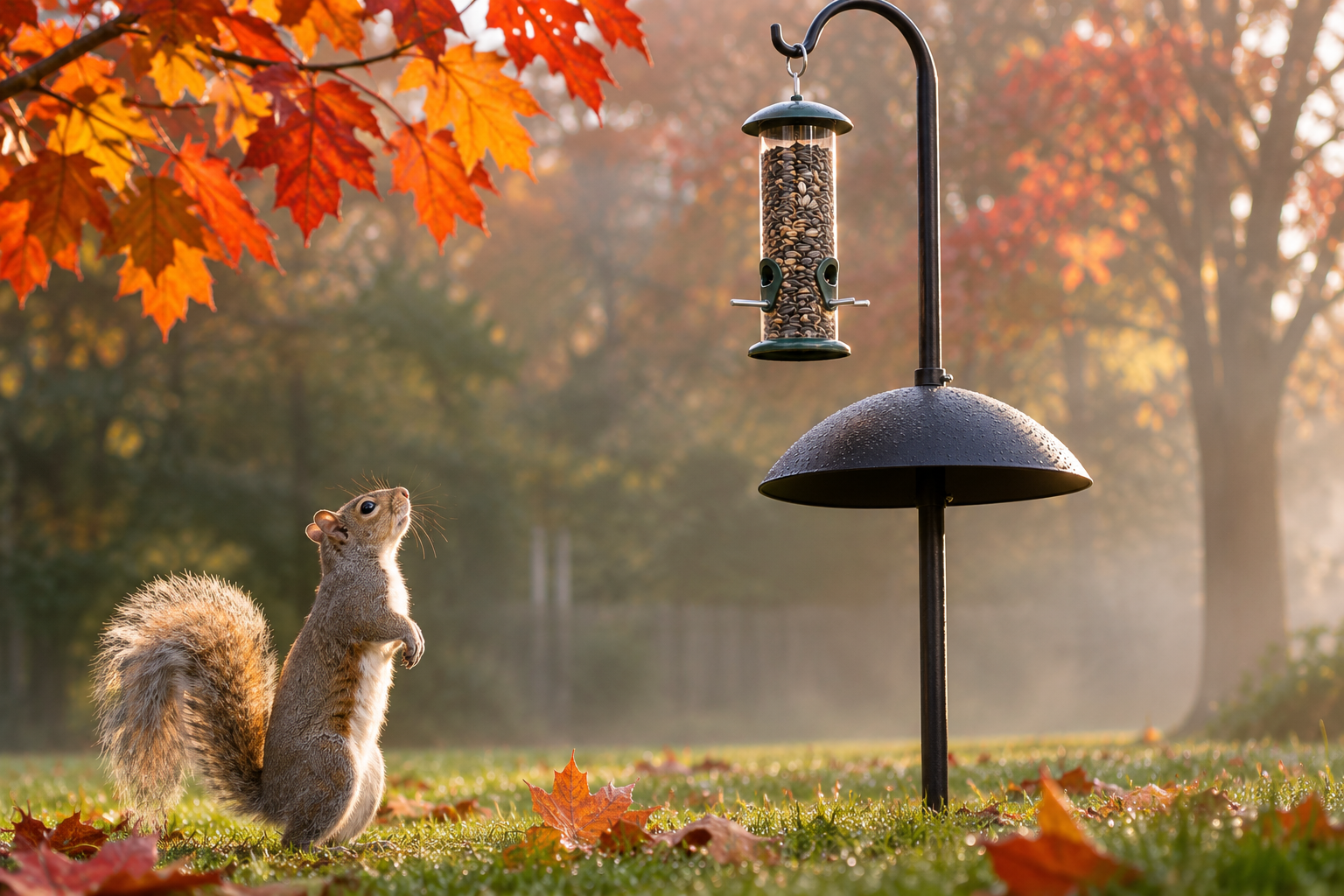
A baffle is a cone or dome that blocks a squirrel from climbing up a pole. For it to work, it needs to be big enough and high enough. A good baffle is about 6 inches wide or more, around 18 inches long, and mounted between 4 and 5 feet off the ground, just under the feeder. If it sits too low, squirrels will jump on top of it and use it as a launch pad.
2. Choose a weight activated feeder
These feeders have spring loaded perches or cages. A small bird is too light to move them, so the seed ports stay open. When a heavy squirrel lands, the weight pulls the cage down and covers the ports, and the seed stays out of reach. Many models let you adjust the tension, so you can keep larger birds from using them if needed.
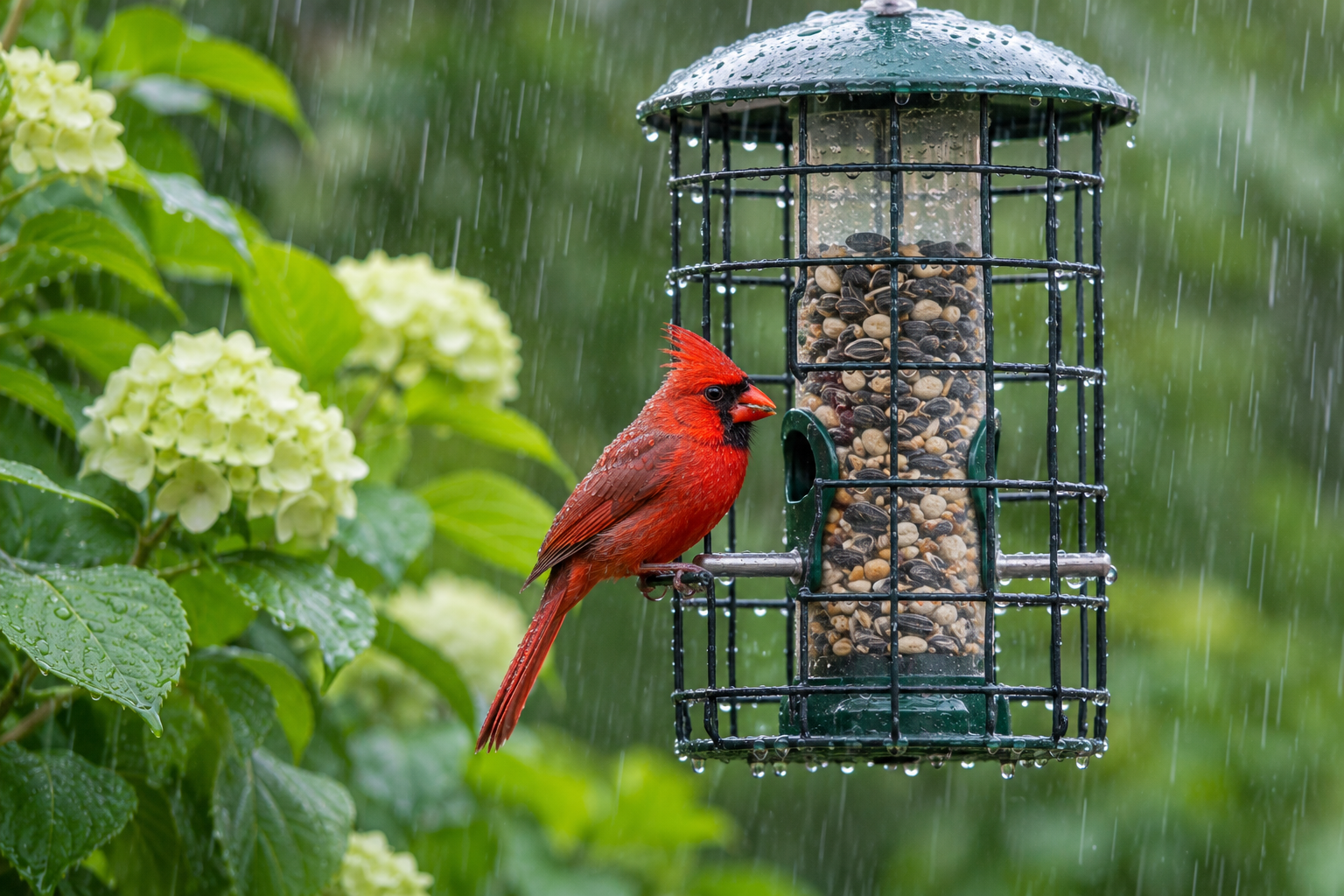
3. Use a cage feeder
A cage feeder wraps a wire guard around a tube of seed. Small songbirds fit through the gaps, but squirrels and larger birds cannot reach the seed. This option works well for chickadees, finches and titmice. A cage alone is not perfect, because a squirrel can still reach through and pull out some seed, so combine it with good placement.
4. Wrap the pole in metal
If your feeder is on a wooden post, or if squirrels climb a nearby tree or pole, wrap a wide sheet of smooth metal flashing around it. University extension experts suggest a section at least 3 feet wide, with the bottom edge about 3 feet above the ground. The slick surface gives squirrels nothing to grip.
5. Try a dome above the feeder
When you hang a feeder from a hook or a line, place a two way dome baffle above it. The dome tips when a squirrel lands on it, and it also keeps rain and snow off your seed. Use it together with the right distance from trees, because a baffle cannot stop a squirrel that jumps from the side.
The Seeds Squirrels Hate and Birds Love
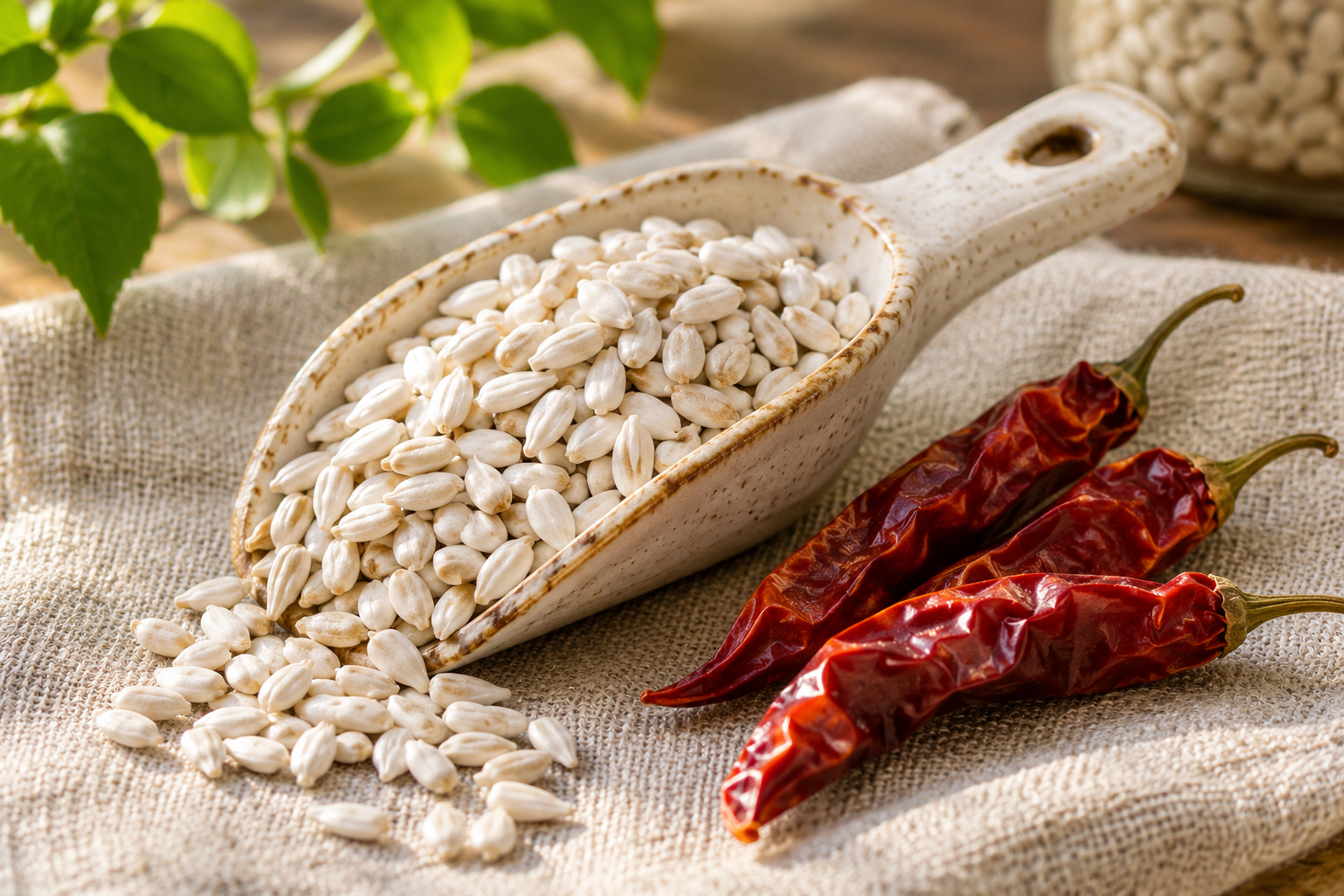
You can also change what you offer. Safflower seed is a small white seed with a thick shell and a bitter taste. Squirrels usually skip it, and many birds, including cardinals, chickadees and titmice, enjoy it. Some squirrels learn to eat it anyway, and some birds prefer sunflower, so switch slowly by mixing a little safflower into your usual seed and adding more over a few weeks.
Hot pepper seed is another option. Squirrels and other mammals feel the burn of capsaicin, the compound that makes peppers hot, but many birds seem to eat treated seed without a problem. A test at Cornell found that pepper coated seed kept gray squirrels away and still attracted birds. Newer research suggests that very spicy seed may put off some birds, such as cardinals, so start with a mild blend and watch your visitors.
Pepper seed can irritate your eyes, nose and lips, so wear gloves when you fill and clean your feeders. If you want to try a homemade version, do not add loose cayenne powder to the feeder yourself, because the dust can blow into eyes. Buy a coated blend instead.
Clean Up the Mess Under the Feeder
Squirrels notice food on the ground just as quickly as food in a feeder. Spilled seed and old husks under your feeder act like a welcome sign for squirrels and mice. A seed catcher tray under the feeder keeps most of the mess off the ground and saves you money on extra seed.
Rake or sweep up husks and old seed every week or two. Wet, moldy seed on the ground can also make birds sick, so cleaning protects them as well. Choose no mess blends or hulled seed, which leave fewer shells behind.
Give Squirrels Their Own Snack Spot
Sometimes the easiest solution is a peace offering. A squirrel feeding station set up far from your bird feeders gives them something to do. Fill it with peanuts in the shell, sunflower seeds or a dried corn cob, and place it at the far end of your yard.
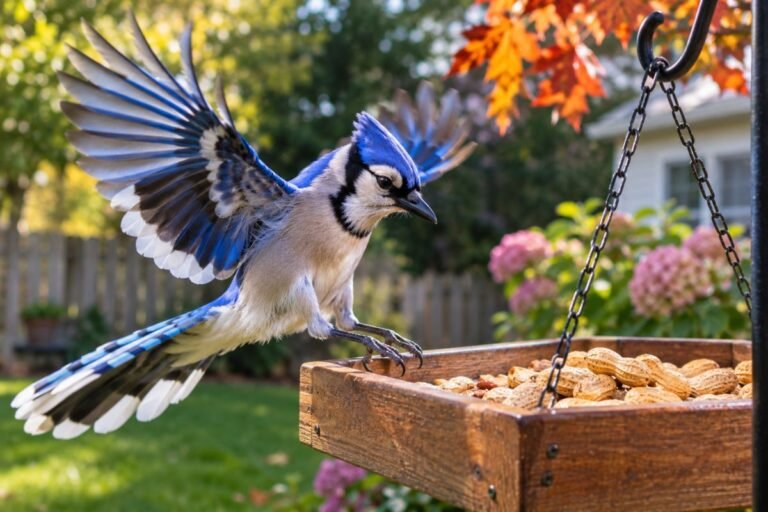
This will not stop every raid, but many people find it cuts the pressure on the bird feeders. It also lets you enjoy watching squirrels without paying for their meals out of the bird seed budget. Blue jays love peanuts too, so keep the squirrel station far from your jay feeder, or read how to attract blue jays to your backyard without feeding the whole neighborhood.
5 Mistakes That Let Squirrels Win
- Hanging the feeder from a tree branch, which gives squirrels a perfect jumping spot.
- Mounting a baffle too low, so squirrels jump on top of it instead of sliding off.
- Placing a pole feeder within 8 feet of a fence, deck or roof.
- Leaving spilled seed and husks on the ground below the feeder.
- Giving up after one trick, instead of combining placement, a baffle and a better feeder.
Fix even two of these and you will likely see a clear drop in raids within a week or two.
Watch the Raiders With a Camera
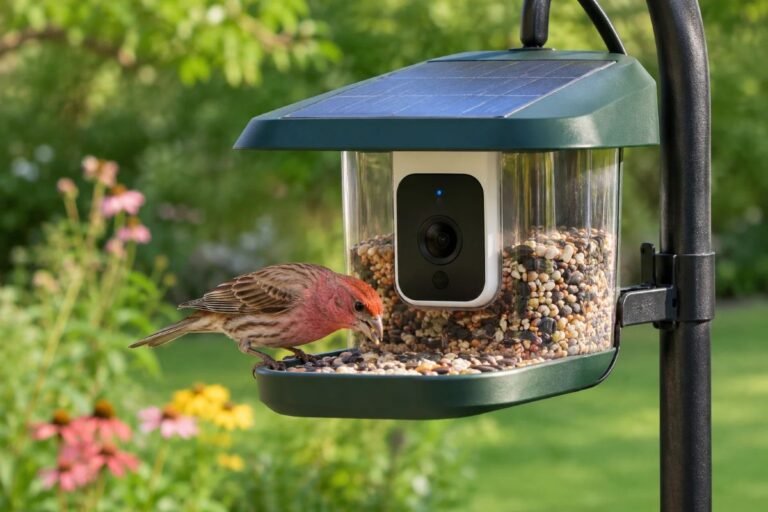
It can be hard to know who is really emptying your feeder, since squirrels often visit at dawn or while you are away. A smart bird feeder with a built in camera sends a short video to your phone, so you can see which birds visit, which animals sneak in, and when.
If you are wondering whether a camera feeder is worth the money, read our honest guide on whether smart bird feeders are worth it.
When you are ready, you can compare the Birdfy camera feeders and choose the model that fits your yard and your budget.
Final Thoughts
Squirrel proofing a feeder is a puzzle, and squirrels will test every solution you build. Start with distance and a good baffle, add a feeder that closes under heavy weight, keep the ground clean, and try safflower or a mild pepper blend. Make one change this week, watch what happens, and adjust from there.
For the cold months, when feeders matter most to birds, read our guide on what to feed birds in winter.
Sources
National Audubon Society, How to Stop Squirrels From Raiding Your Bird Feeders
National Wildlife Federation, Thwarting Backyard Squirrels
University of Nebraska Extension, Managing Wildlife Around Bird Feeders
Wild Birds Unlimited, How to Problem Solve Using Hot Pepper
National Audubon Society, Seems Like Birds Can Taste Spice After All
Perky-Pet, Squirrel Resistant Feeders and Squirrel Feeding Stations
Clemson Home and Garden Information Center, Review of Spicy Bird Seed