How to Attract Chickadees to Your Backyard
This post contains affiliate links. If you buy through them, Birdstyl may earn a small commission at no extra cost to you. Read our Affiliate Disclosure.
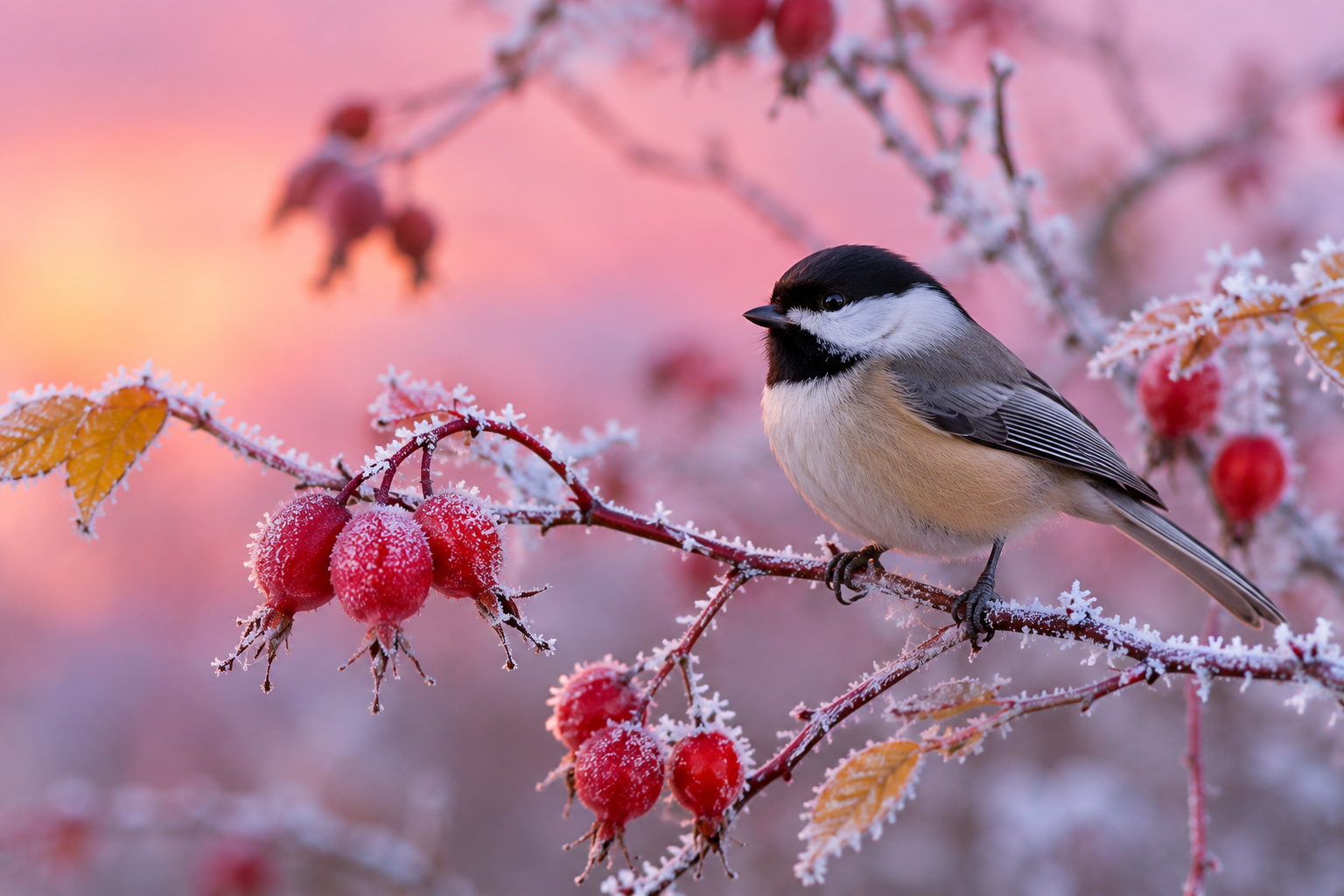
Chickadees are some of the friendliest birds you can invite into a yard. They are tiny, curious and bold, and they often find a new feeder within days. Many people say a chickadee was the first bird that made them fall in love with birdwatching.
This guide shows you which chickadees live near you, the 5 foods they like best, the feeder setup that makes them feel safe, and the nest box size that really works. You will also learn why they grab a single seed and fly off, and how to help them through cold winter nights.
Meet the Chickadees You Can Expect in Your Yard
There are seven chickadee species in the United States, and every one of them has a dark cap and a black bib. The two you are most likely to meet are the Black-capped Chickadee and the Carolina Chickadee. They look almost the same, so the easiest clue is where you live.
The Black-capped lives across the northern half of the country and down the Appalachian Mountains. The Carolina replaces it in the southeastern woodlands. In a band that runs roughly from New Jersey to Kansas the two meet and sometimes hybridize. If you live there, listen closely: the Black-capped sings a simple two note song, while the Carolina sings a faster, higher four note song.
Neither bird migrates. Chickadees stay in the same neighborhood all year, which means a feeder you keep stocked can give you a visit every single day, even in the middle of winter.
5 Foods That Bring Chickadees to Your Feeder
In spring, summer and fall, insects and spiders make up most of a chickadee’s diet, often 80 to 90 percent. At a feeder they switch to rich, easy to carry foods. These five are the most reliable.
1. Black oil sunflower seeds
This is the top choice. The shells are thin, the seeds are full of fat, and chickadees can crack them open by holding a seed in their feet and hammering it with their bill. Sunflower hearts, which have no shell, are even easier and leave no mess on the ground.
2. Suet
Suet is a high energy block of fat, and chickadees visit it all year. Choose peanut or nut flavored cakes in cold weather. When it gets hot, switch to no melt suet so the fat does not turn soft and coat their feathers. For a full list of cold season foods, see our guide on what to feed birds in winter.
3. Shelled peanuts
Peanut pieces or hearts are a favorite, and chickadees can carry them away easily. Offer them in a mesh peanut feeder or mixed into a seed blend. Choose plain, unsalted peanuts.
4. Mealworms
Dried mealworms give chickadees the insect protein they crave. They are especially welcome in spring, when parents are busy feeding hungry chicks, and in winter, when live insects are hard to find.
5. Raisins and peanut butter
A few raisins on a tray feeder make a sweet treat, and chickadees will also eat peanut butter. You can spread it in the grooves of a tree trunk, where it is easy to reach and does not make a mess on a feeder.
Put out only a small handful of any food at first. Fresh food that is eaten within a day or two is safer than a big pile that sits in the rain.
The Right Feeder Setup for Chickadees
Chickadees are small and quick, so they like open feeders where they can grab a seed and go. Tube, hopper, platform, window and suet cage feeders all work. They do not mind tiny hanging feeders that swing in the wind, which makes them one of the easiest birds to attract.
If starlings or grackles scare the chickadees away, choose a caged feeder with an opening of about 1.5 inches. Small birds slip inside, and larger birds stay out.
Placement matters just as much as the feeder. Chickadees feel safest when cover is close, so hang the feeder near a tree or a thick shrub. A short dash to cover at the first sign of a hawk keeps them calm and coming back. If you are still choosing a model, our guide on how to choose the best bird feeder for your backyard explains which type fits which bird.
Wash your feeders with hot soapy water every couple of weeks, and rinse them well. Clean feeders help stop the spread of disease between the birds that visit.
Why Chickadees Grab One Seed and Fly Away
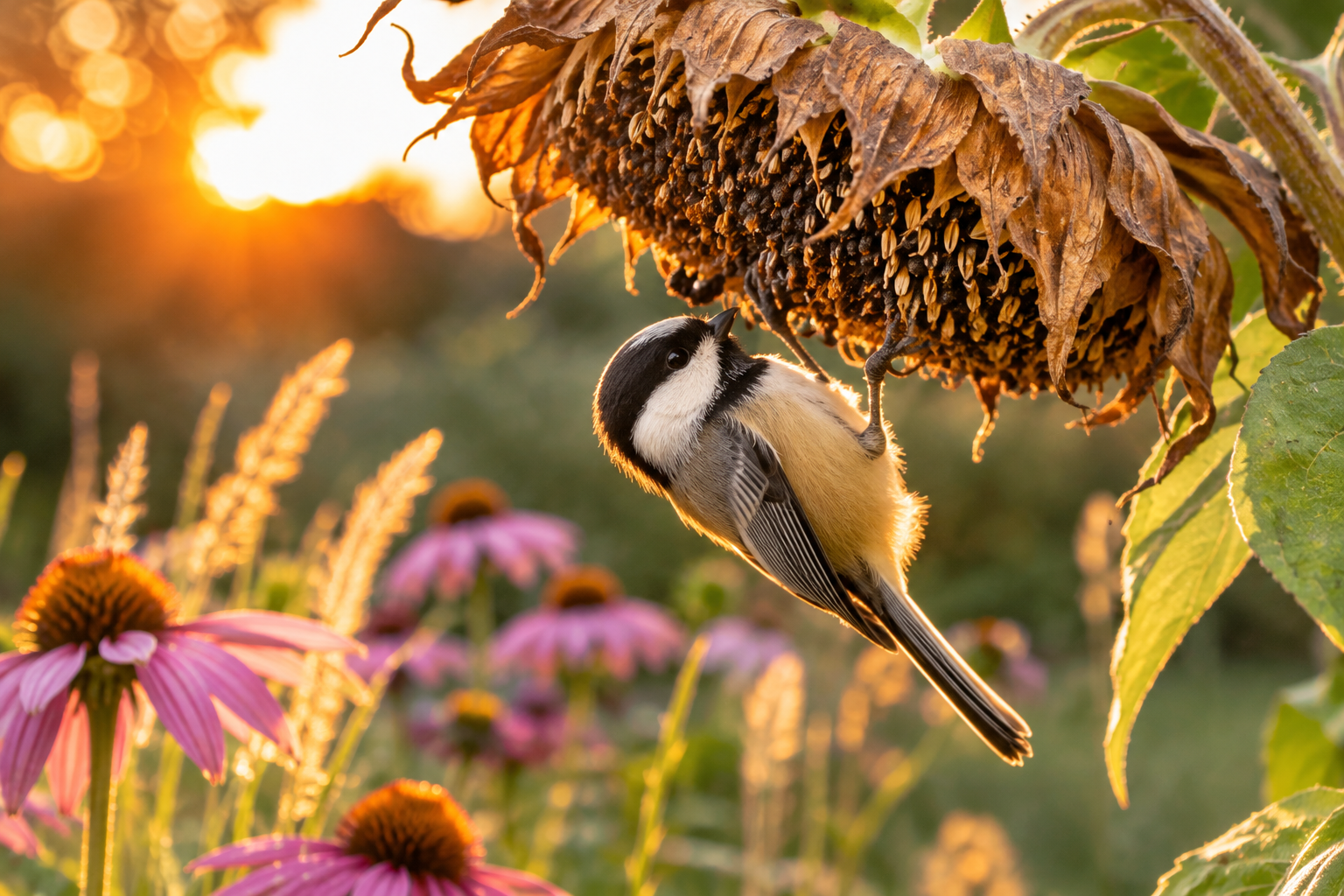
Watch a chickadee for a few minutes and you will notice something odd. It lands, takes a single seed and leaves, then comes back for another. It is not being shy. It is hiding food for later, a habit called caching.
A chickadee tucks seeds into bark crevices, clusters of pine needles and other small gaps, and each seed goes into a different spot. Scientists have found that they can remember these hiding places for at least 28 days. Researchers also report that the part of the brain used for spatial memory grows by about 30 percent in fall, then shrinks again in spring.
For you, this means one thing. A busy feeder does not mean a greedy bird. Keep it filled, because every seed you offer in fall can become a winter snack hidden somewhere in your yard.
How Chickadees Survive Freezing Winter Nights
A chickadee weighs no more than half an ounce, yet it stays through the coldest winters. Its normal body temperature is about 104 degrees Fahrenheit, and on a freezing night it can let that temperature drop by as much as 10 degrees Celsius. Researchers report that this can save about half of its overnight energy.
To get through the night, a chickadee needs a snug hiding place. It may squeeze into a tree cavity, an old woodpecker hole, thick evergreen branches or even a nest box. In winter, chickadees often join mixed flocks with nuthatches and small woodpeckers, which gives them more eyes to watch for danger.
You can help by keeping a high fat feeder stocked on the coldest days, because food eaten before dark fuels the night ahead. Leaving a nest box up all winter also gives chickadees a warm place to sleep.
The Nest Box Size Chickadees Actually Use
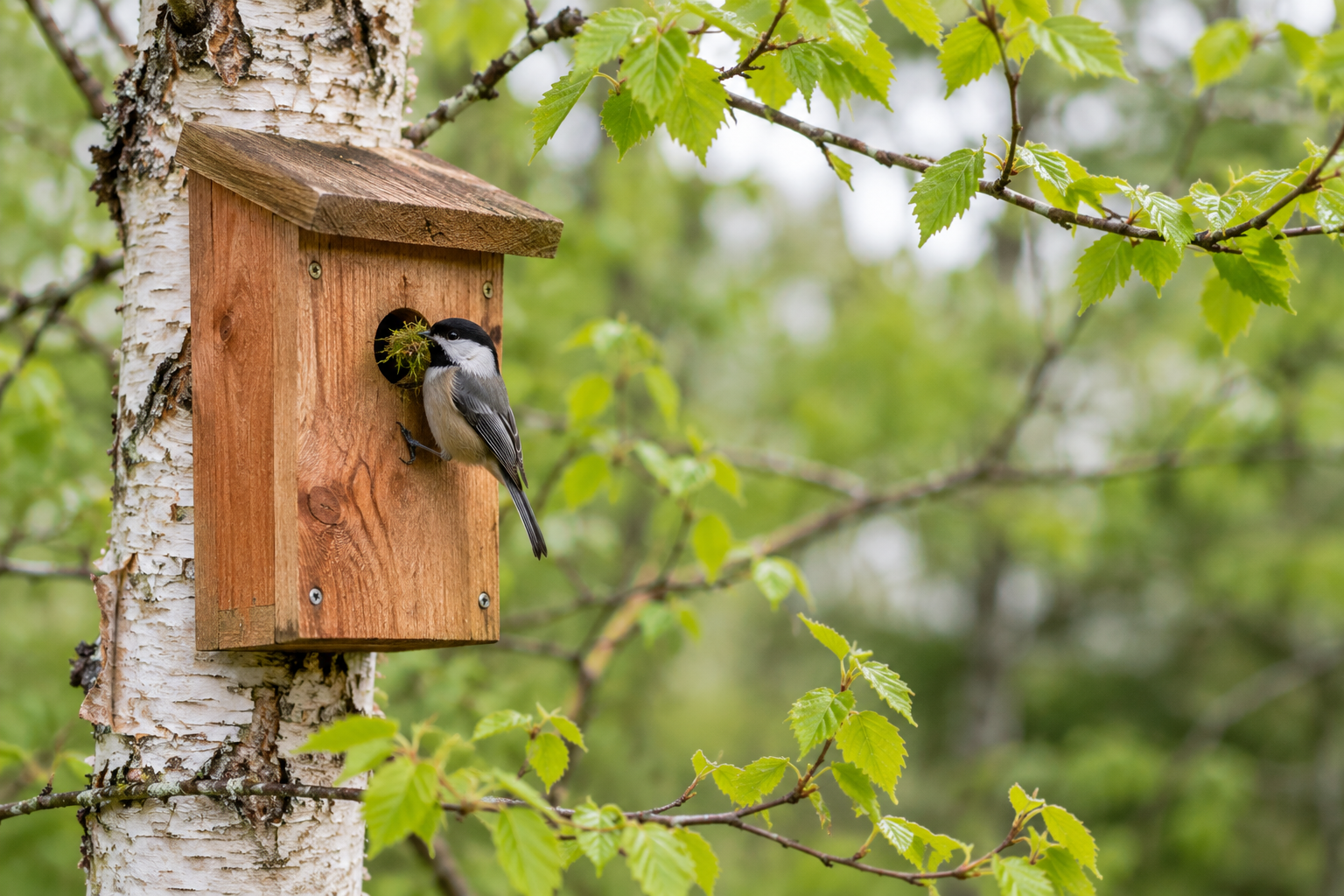
Chickadees nest in cavities, and they will happily use a box if the size is right. The measurements below come from the Cornell Lab of Ornithology’s NestWatch program.
- Entrance hole: exactly 1 1/8 inches. This is small enough to keep out House Sparrows and starlings.
- Floor: about 5 1/2 by 5 1/2 inches.
- Inside depth: about 8 inches.
- Height: roughly 5 to 10 feet above the ground, where you can still check it easily.
- Direction: facing away from the prevailing wind.
Fill the bottom with about an inch of wood shavings. Black-capped Chickadees like to dig their own nest cavity, and some people fill the box almost to the hole with shavings so the birds can dig it out. The Carolina Chickadee does very little digging, so extra shavings are not needed for it.
Keep boxes about 650 feet apart, since chickadees defend their territory. Clean each box out in fall and again in early spring.
Plant a Chickadee Friendly Yard
Feeders bring chickadees close, but plants keep them coming back. Raising one brood takes thousands of caterpillars, and native trees host far more caterpillars than imported ones do. Oaks, willows, birches and dogwoods are especially good.
Evergreens such as spruce, pine and juniper give shelter in winter and plenty of places to hide seeds. Leave some leaf litter under your shrubs, because it hides small insects chickadees love to find. If a dead tree is not a danger to your home, leaving it standing gives chickadees a place to dig a nest, and over 80 species of birds use dead trees in some way.
A shallow bird bath near a bush gives them a place to drink and wash. Clean it every week with a stiff brush.
5 Mistakes That Keep Chickadees Away
- Hanging the feeder in the middle of an open lawn, far from any cover.
- Using a nest box with an entrance hole bigger than 1 1/8 inches, which invites House Sparrows to take over.
- Letting the feeder run empty during a cold snap, when chickadees depend on it most.
- Spraying lawns and trees with insecticide, which removes the insects they feed their chicks.
- Skipping feeder cleaning, which spreads disease in a busy flock.
Fixing even one of these problems can make a clear difference within a few weeks.
Watch Chickadees Up Close
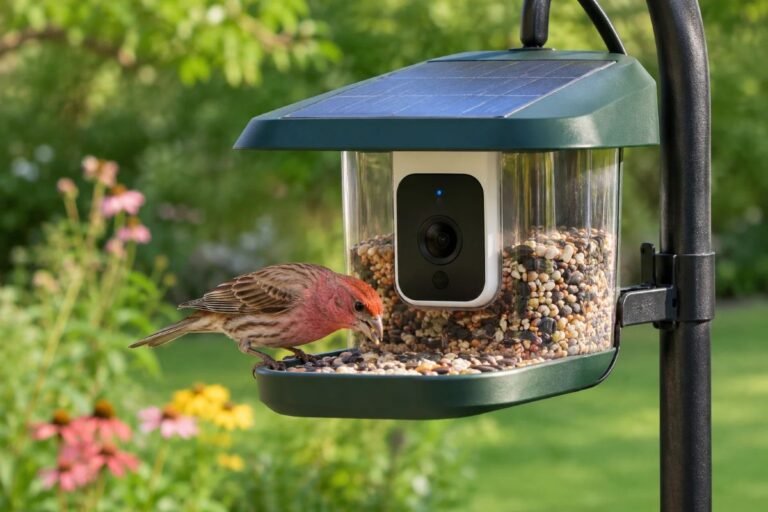
Chickadees move fast, and their best moments last only a second. A smart bird feeder with a built in camera records each visit and sends a short video to your phone, so you can watch the seed grabbing and caching without scaring them off.
If you are not sure a camera feeder is worth the money, read our honest guide on whether smart bird feeders are worth it.
When you are ready, you can compare the Birdfy camera feeders and choose the model that fits your yard and your budget.
Final Thoughts
To attract chickadees, offer black oil sunflower seeds and suet, hang a feeder near cover, keep it stocked through winter and put up a box with a 1 1/8 inch hole. Start with one feeder and a handful of seeds this week, and you may have a chickadee at your window before the weekend.
If you enjoy bold, curious birds, you might also like our guide on how to attract blue jays to your backyard.
Sources
Cornell Lab of Ornithology, All About Birds, Black-capped Chickadee
Cornell Lab of Ornithology, NestWatch, Black-capped Chickadee nest box guidelines
National Audubon Society, Black-capped Chickadee field guide
National Audubon Society, Identifying Black-capped and Carolina Chickadees
Smithsonian National Zoo and Conservation Biology Institute, Black-capped Chickadee
Manitoba Museum, Chickadee winter survival
Montana Naturalist, Black-capped Chickadees and winter survival
University of Nebraska Extension, 5 Tips to Make Your Landscape More Bird-Friendly
Pennsylvania Game Commission, Chickadees